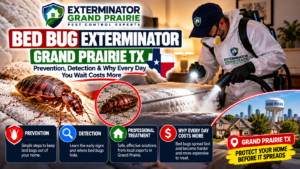

If you are seeing pests in your Grand Prairie, Arlington, Irving, Cedar Hill, Duncanville or DeSoto home, professional pest control can address the root cause not just the pest you found today. Exterminator Grand Prairie provides professional exterminator services across Grand Prairie TX and all surrounding North Texas communities.
If you are Googling pest control right now, something made you look it up. A cockroach in the kitchen. A rodent noise in the ceiling. An ant trail along the baseboard that wasn’t there last week.
This guide answers the ten most important questions Grand Prairie homeowners ask before calling an exterminator and gives you everything you need to decide whether professional pest control is the right move for your property.
Common Household Pests in North Texas (And Why Grand Prairie Homes Are Vulnerable)
North Texas has a pest problem that is not going away. The climate hot summers, mild winters, high humidity near creek corridors and lakes creates conditions that support year-round pest activity.
| Pest | Where Found | Peak Season |
|---|---|---|
| Cockroaches (American & German) | Kitchens, bathrooms, utility areas | Year-round, worse in summer |
| Rodents (rats & mice) | Attics, walls, garages, crawl spaces | Fall and winter |
| Ants (including fire ants) | Yards, kitchens, foundations | Spring through fall |
| Termites | Wood structures, foundations | Spring swarm season |
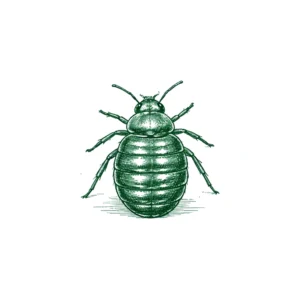
| Bed Bugs | Bedrooms, furniture | Year-round |
| Mosquitoes | Yards, standing water areas | March through October |
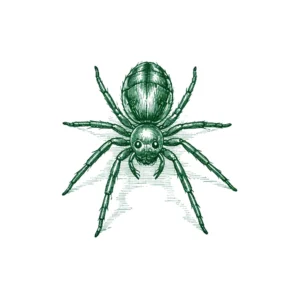
| Spiders | Garages, storage, corners | Year-round |
| Fleas & Ticks | Yards, pets, furniture | Spring through fall |
Grand Prairie sits in Dallas County and Tarrant County, surrounded by Joe Pool Lake, Mountain Creek Lake, and the Trinity River corridor all of which contribute to mosquito activity, moisture-related pest pressure and wildlife access that pushes rodents and other pests toward residential areas.
Neighborhoods like Lake Parks, Pecan Estates, Glen Oaks, Coronado Forest and Wild Rose Ridge experience higher pest pressure from surrounding greenspace. If your home is near creek beds, lakes, open fields or wooded lots along Highways 161, 303 or 360, you are in a higher-activity zone.
What Attracts Bugs to Your Home?
Pests are not random. They come to your property for specific reasons. Understanding what attracted them is the difference between a one-time treatment and a permanent solution.
Food Sources
Cockroaches and rodents are drawn to kitchens, pantries, unsealed food containers, grease buildup behind appliances, and garbage storage areas. Even a small crumb trail is enough to establish a foraging route.
Moisture
Moisture is the number one attractor for cockroaches, silverfish, earwigs, mosquitoes, termites and rodents. Problem areas include leaking pipes under sinks, standing water in flower beds, poor drainage near the foundation, clogged gutters, condensation around AC lines and wet wood near the structure.
Entry Points
Pests don’t materialize inside your home — they enter through something. Common access points include gaps around doors, damaged window screens, foundation cracks, utility penetrations, roof vents and soffits, and weep holes in brick veneer.
Why Do Pests Keep Coming Back?
This is the most frustrating situation for homeowners. You spray. You set traps. You buy the can from the hardware store. The pest disappears for a week. Then they are back. Here is why that happens.
You Are Treating the Symptom, Not the Source
Killing the pest you see does not address the entry point they used, the nest or colony behind the wall, the food or moisture source attracting them, or the outdoor habitat supporting them. One cockroach in your kitchen is rarely one cockroach.
The Colony Is Still Alive
For social insects like ants, cockroaches and termites, the pest you see is usually a worker or scout. The colony — which can include thousands of individuals — is still active behind walls, under the slab or in the yard. Over-the-counter sprays kill what they contact. They do not penetrate to the colony.
Signs You Need Pest Control Immediately
Some situations are clear emergencies. Call an exterminator immediately if you are seeing:
- Droppings in multiple rooms — indicates an established population, not a single stray pest
- Live pests during the day — cockroaches and rodents are nocturnal; daylight sightings mean the population is large
- Structural damage — chewed wood, damaged insulation, gnawed wiring
- Mud tubes — pencil-width tubes on your foundation are a termite sign. Do not ignore this.
- Bed bug stains or bites — dark spots on mattresses and a line of bites while sleeping
- Sounds inside walls or ceiling — scratching, gnawing or scurrying sounds at night are a strong rodent indicator
- Termite swarms — flying termites near your foundation or windowsills signal an active colony
Seasonal Pest Calendar for North Texas

Spring (March – May): Termites, Ants, Mosquitoes
Warmer temperatures trigger termite swarm season across Dallas and Tarrant County. Fire ant mounds become visible and expand rapidly after winter dormancy. Mosquito populations begin building as standing water accumulates from spring rain. Pre-season perimeter treatment before swarm season is the most effective approach.
Summer (June – August): Peak Pest Season
This is North Texas’s peak pest season. Heat drives pests toward air-conditioned structures. Cockroach activity peaks — German cockroaches proliferate rapidly in summer conditions. Mosquito pressure remains extremely high through August. Fleas and ticks become a significant issue for properties with pets or adjacent to wooded areas.
Fall (September – November): Rodent Season
As temperatures drop, rodents begin seeking interior shelter. This is the most important season to seal entry points. Rodent exclusion inspection before November is strongly recommended for Grand Prairie properties near Joe Pool Lake, Mountain Creek Lake and the Trinity River corridor.
Winter (December – February): Interior Threats
Most pests reduce activity but do not disappear. Rodents that entered in fall are now established inside the structure. Cockroaches retreat to warmer interior areas — behind refrigerators, under dishwashers, in wall voids. Interior perimeter treatment and rodent monitoring are priorities during winter months.
How Often Should Pest Control Be Done?
| Service Frequency | Best For | Visit Cost |
|---|---|---|
| Quarterly (every 3 months) | Most Grand Prairie homeowners — standard maintenance | $100–$200 per visit |
| Monthly | Active infestations, high-pressure properties near lakes or open land | $40–$75 per visit |
| One-time treatment | Isolated, single pest event | $100–$350 |
| Annual termite inspection | All homeowners — spring recommended | $75–$150 |
How Much Does Pest Control Cost in Grand Prairie TX?

| Service Type | Estimated Cost |
|---|---|
| One-time general treatment | $100 – $350 |
| Quarterly plan (per visit) | $100 – $200 |
| Monthly plan (per visit) | $40 – $75 |
| Cockroach treatment | $100 – $550 |
| Rodent removal & exclusion | $200 – $600 |
| Termite treatment | $1,300 – $3,500 |
| Mosquito control (per treatment) | $75 – $200 |
| Fire ant treatment | $150 – $400 |
| Bed bug treatment | $300 – $1,500+ |
| Termite inspection | $75 – $150 |
The question is not just what the treatment costs. The question is what the untreated problem costs — in property damage, lost sleep and continued exposure. A recurring infestation treated cheaply three times costs more than one thorough professional treatment that resolves the problem.
Is Professional Pest Control Worth It?
| Factor | DIY | Professional |
|---|---|---|
| Upfront cost | Lower | Higher |
| Total cost over time | Often higher (repeat purchases) | Often lower (resolved faster) |
| Products used | Retail-grade | Commercial-grade, stronger |
| Treatment depth | Surface only | Inspection + targeted treatment |
| Entry point identification | Rarely included | Usually included |
| Guarantees | None | Often included |
| Suitable for all pest types | No | Yes |
For anything that has been happening for more than two weeks, involves multiple rooms, involves termites or rodents, or has come back after your own treatment — professional pest control is the more effective and often cheaper long-term solution.
Same-Day Pest Control in Grand Prairie TX: When Should You Call?
Call for same-day or emergency pest control if you are experiencing:
- Rodents visible in living areas during the day
- Termite swarmers inside the structure
- Bed bug confirmation with children in the home
- Cockroach activity in a kitchen with young children
- Rodent gnawing sounds near electrical wiring in the walls
- Wildlife entry into the attic (raccoon, squirrel, opossum)
- You are about to list your home for sale and discovered pest activity
Pest Control in Grand Prairie TX: Neighborhood Guide
Lake Parks, Pecan Estates & Pecan Acres
These neighborhoods border Joe Pool Lake and Mountain Creek Lake — which means elevated mosquito pressure from spring through fall, rodent activity from adjacent wooded areas, and fire ant presence in open lawns. Homeowners in these areas benefit most from quarterly perimeter programs that include mosquito treatment and rodent monitoring.
Beacon Hill, Berkshire Park & Brookfield North
Established residential neighborhoods with mature trees, dense landscaping and older construction — which often means more entry points, more insect harborage and higher termite risk. Annual termite inspections and consistent perimeter maintenance are important here.
Coronado Forest, Coronado Woods & Cross Timbers
Properties adjacent to wooded areas experience higher spider, earwig, cricket and rodent pressure, especially in fall when temperatures drop and pests seek interior shelter.
Continental Estates, Country Club Park & Glen Oaks
Larger lot sizes with extensive landscaping create more opportunities for fire ant colonies, mosquito breeding areas and exterior pest harborage.
Pest Control Serving All Surrounding North Texas Communities
Arlington TX — One of the largest pest control markets in North Texas, with significant cockroach, mosquito and rodent pressure across both older and newer residential areas.
Irving TX — Commercial corridors and established neighborhoods with year-round cockroach activity and significant mosquito pressure near the Elm Fork Trinity River.
Cedar Hill TX — Properties near Joe Pool Lake and Cedar Hill State Park experience elevated rodent, mosquito and wildlife pest pressure.
Duncanville TX — Established neighborhoods with significant ant, cockroach and rodent pressure in older housing stock.
DeSoto TX — Residential growth areas with termite risk in newer construction and perimeter pest pressure from adjacent greenspace.
Mansfield TX — Expanding residential communities with active fire ant, termite and mosquito pressure.
Lancaster TX — Properties with large lot sizes and rural adjacency experience rodent and wildlife pest pressure alongside standard residential pests.
FAQs: Pest Control Grand Prairie TX
How much does pest control cost in Grand Prairie TX?
A one-time general pest treatment in Grand Prairie typically costs $100–$350 depending on property size and pest type. Quarterly maintenance plans average $100–$200 per visit. Specialized treatments for termites, bed bugs or rodent exclusion are priced separately.
Is same-day pest control available in Grand Prairie TX?
Yes. Exterminator Grand Prairie offers same-day exterminator service across Grand Prairie and surrounding North Texas communities for urgent pest situations.
How often should I get pest control done at my Grand Prairie home?
Most homeowners benefit from quarterly pest control — four visits per year aligned with seasonal pest changes. Properties with higher pest pressure, adjacent to lakes, wooded areas or commercial corridors may benefit from monthly service.
Why do pests keep coming back after treatment?
Most DIY treatments address only the pest you see, not the entry points, colony, food sources or outdoor conditions that attract and support pest activity. Professional pest control assesses the full property rather than just the individual pest.
What pests are most common in Grand Prairie TX?
The most common household pests in Grand Prairie and North Texas include cockroaches, rodents (mice and rats), ants and fire ants, termites, mosquitoes, spiders, bed bugs, fleas and ticks.
Is professional pest control worth it compared to DIY?
For recurring activity, multiple pests, termites, rodents or bed bugs, professional pest control is almost always more effective and more cost-efficient over time than repeated DIY attempts.
Pests in Your Grand Prairie Home? Get the Property Inspected. Get It Treated. Get It Done.
Serving Grand Prairie · Arlington · Irving · Cedar Hill · Duncanville · DeSoto · Mansfield · Lancaster