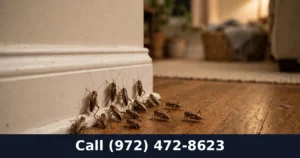
TL;DR: Millipede treatment in Grand Prairie TX typically costs 150 to 350 dollars for a standard home visit. Millipedes are slow, wormlike pests that enter homes after heavy rain when soaked soil drives them to seek damp shelter. They do not bite people, yet hundreds can appear in a basement or garage in a single night. A professional visit that combines exterior treatment, entry sealing, and moisture control solves the problem, and same day help is available across Grand Prairie TX and nearby Arlington, Irving, and Duncanville.
Millipedes show up without warning. One evening the floor is clear, and the next morning dozens of small dark millipedes are crawling along a basement wall or gathered near a back door. They move slowly and roll into a tight coil when touched. The same day exterminator in Grand Prairie TX can respond fast when a rain driven invasion fills a living space overnight.
How Much Does Millipede Extermination Cost in Grand Prairie TX
| Service | Typical Price | What It Covers |
|---|---|---|
| Inspection and assessment | 0 to 100 dollars | Entry points, moisture, mulch beds, and a plan |
| Single treatment, standard home | 150 to 250 dollars | Interior spot treatment plus exterior barrier |
| Treatment plus entry sealing | 250 to 350 dollars | Full treatment plus sealing of gaps and thresholds |
| Severe invasion, large home | 350 to 550 dollars | Extended exterior treatment and multiple rooms |
| Follow up visit | 75 to 150 dollars | Recheck, barrier refresh, and moisture advice |
Prices vary with home size, the number of millipedes, and how much sealing is needed. A small invasion in one garage costs far less than hundreds across a basement and two rooms. Compare what a quote covers, not just the headline price, and the same honesty applies to pest control in Grand Prairie TX.
1. Live Millipedes Crawling Along Walls and Floors After Rain
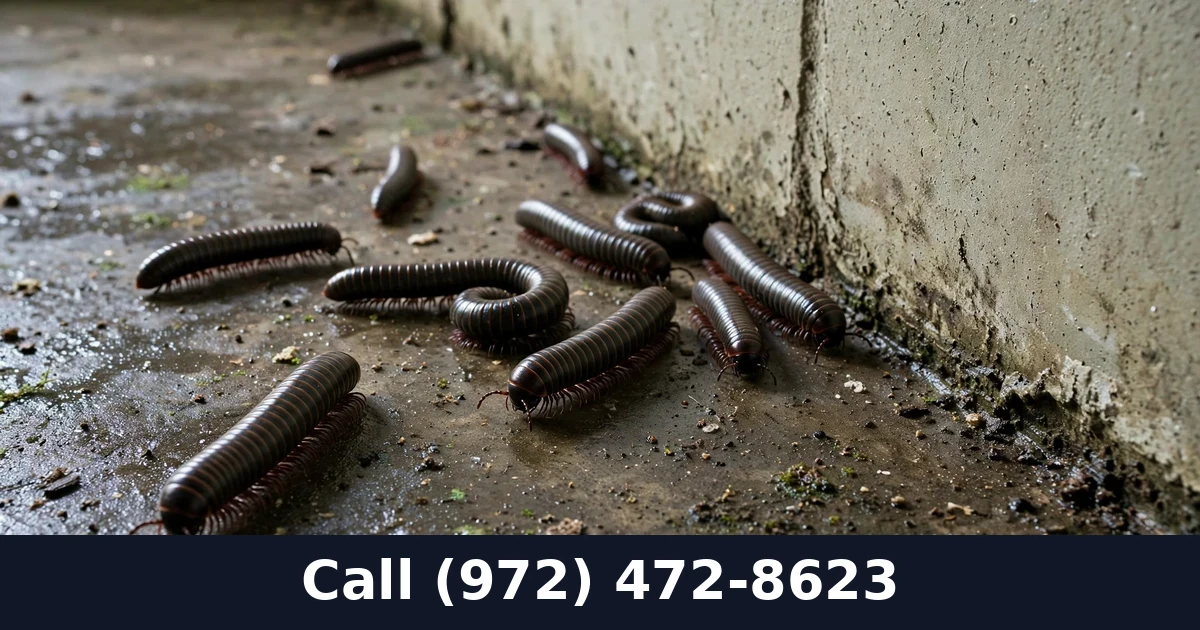
The clearest sign is the sighting itself. Millipedes are dark brown or black, slow moving, and shaped like a tiny worm with a rounded body and many short legs. After heavy rain in Grand Prairie TX they crawl out of soaked soil and mulch toward shelter, often a basement or a garage. They follow walls and baseboards and gather where the floor stays cool and damp.
Unlike a centipede, which has one pair of legs per segment and very fast movement, a millipede has two pairs of legs per segment and slow movement. Centipedes hunt insects and can bite. Millipedes feed on decaying leaves and do not bite.
2. Curled Dead Millipedes on Floors, in Basements, and in Garages
Dead millipedes are often the first sign. Indoors, away from damp soil, millipedes dry out and die within a day or two. They curl into a tight spiral on the floor, and dozens can collect along a basement wall or under a garage door. A line of curled bodies shows the path they used to enter.
Sweeping them up does not solve the cause. Fresh curled bodies every morning mean fresh millipedes are still entering each night, usually through a gap under a door, a foundation crack, or a vent without a screen. Damp basements that attract millipedes can also attract silverfish, and the silverfish signs in Grand Prairie TX are worth checking when a basement stays damp.
3. Large Numbers Appearing at Night Near Doors and Windows
Millipedes are most active at night and after rain. You may see only a few during the day, then find fifty or more near a back door after dark. They are drawn to porch lights and to cool damp air near a door threshold, and they slip inside through tiny gaps. Leaves or mulch against that door gives them food and shelter right at the entry.
4. Damp Basements, Garages, and Crawl Spaces That Never Dry Out
Millipedes need moisture to survive. A basement with a damp smell, a garage floor that stays wet, or a crawl space with standing water gives them shelter. They hide under cardboard boxes, behind stored items, and in damp potted plant soil near a door. Homes in DeSoto, Mansfield, Cedar Hill, and Lancaster with older foundations see this most after a wet spring.
Check outside as well as inside. Mulch against the foundation and flower beds that hold water after rain keep soil wet against the house. A dehumidifier helps, but it cannot fix a foundation that stays wet from outside. The same damp conditions can draw rodents, so the signs in rodent control in Grand Prairie TX are worth a quick check when a garage stays damp.
5. A Bad Smell When Millipedes Are Crushed or Disturbed
Millipedes defend themselves with a fluid that smells unpleasant and can stain skin and floors. Crushing one underfoot can release that smell across a room. The fluid can irritate skin and eyes. Pets that mouth a millipede may drool briefly, then recover, although a vet visit is wise if symptoms last. Sweep them into a dustpan, seal them in a bag, and wipe the area with warm soapy water.
6. Mulch, Leaf Litter, and Compost Piled Against the Foundation
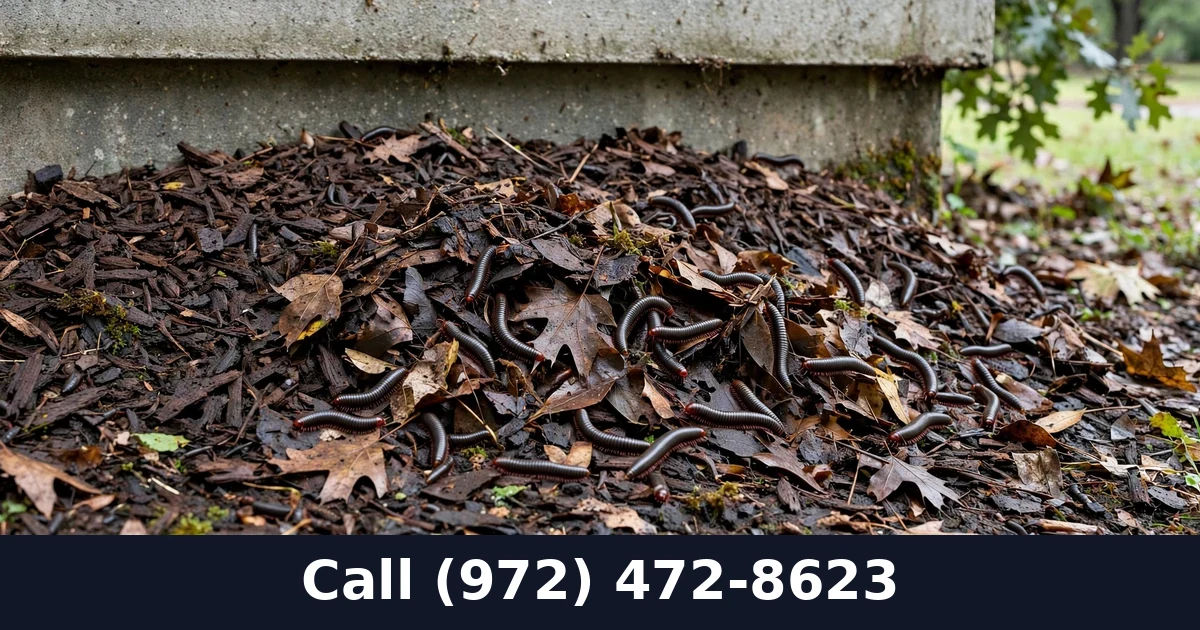
The yard is the source of most millipede invasions. Thick mulch, fallen leaves, and compost piled against the foundation create a damp layer where millipedes breed in large numbers. Lift a board or a pile of leaves near the house after rain in Arlington, Irving, or Dallas and you will often find millipedes curled underneath. Rake leaves away from the wall and keep mulch six inches from the foundation.
What Drives Millipede Treatment Cost Up or Down
- Home size. A small home needs one barrier line. A large home with a basement and a wide yard needs more product and time.
- Severity. A dozen millipedes in one garage is a quick visit. Hundreds across several rooms need full exterior and interior work.
- Moisture problems. A home with a leak, poor grading, or a wet crawl space needs moisture work as well as treatment.
- Entry sealing. Sealing one door threshold is cheap. Sealing vents, pipe gaps, and window frames takes materials and time.
- Urgency. Emergency or same day service costs more, but it stops a large invasion before it spreads to bedrooms.
Why DIY Millipede Control Fails and When to Hire a Pro
DIY control usually fails for three reasons. First, store bought sprays kill the millipedes you can see, but not the hundreds still living in mulch and soil outside. Second, homeowners treat inside and ignore the yard where the invasion starts. Third, homeowners seal a gap while moisture still pools against the foundation, so the next rain pushes a fresh wave through the next weakest entry.
A professional job is a system, not a single spray. Inspection finds every entry and moisture source, exterior treatment creates a barrier around the foundation, interior treatment clears affected rooms, and sealing closes the gaps. The signs in wolf spiders in Grand Prairie TX help tell a damp basement spider problem apart from a millipede invasion.
Important Considerations
- Do not handle millipedes with bare hands. Their defense fluid can irritate skin, so use gloves and a dustpan.
- Do not rely on sprays alone. Killing visible millipedes without fixing moisture and sealing entries leaves the source untouched.
- Keep mulch and leaves away from the wall. A clear dry zone removes food and shelter and makes barrier treatment work better.
- Fix leaks and drainage first. A leaking pipe or poor grading keeps soil wet and invites millipedes back.
- Ask for the plan in writing. A reputable pro lists inspection, barrier, interior treatment, sealing, and follow up separately.

Frequently Asked Questions
Are millipedes dangerous to people or pets?
No. Millipedes do not bite, they do not sting, and they do not spread disease. Their defense fluid can irritate skin and eyes. Keep children and pets away from large groups and call a vet if symptoms last.
Why do millipedes suddenly appear after rain in Grand Prairie TX?
Heavy rain floods the soil and mulch where millipedes live, so they crawl out and search for drier shelter. Gaps under doors and cracks in foundations give them an easy way in.
How much does millipede extermination cost in Grand Prairie TX?
Most homes pay 150 to 350 dollars for a standard visit with inspection, interior treatment, and an exterior barrier. Severe invasions cost 350 to 550 dollars. A follow up visit costs 75 to 150 dollars.
How fast can you treat a millipede invasion?
Inspection and treatment can often happen the same day in Grand Prairie TX, Arlington, Irving, Duncanville, DeSoto, Mansfield, Cedar Hill, Lancaster, and Dallas. Most jobs finish in one visit.
How do I keep millipedes from coming back?
Keep mulch and leaves away from the foundation, fix leaks and poor drainage, run a dehumidifier in a damp basement, and seal thresholds and cracks. Moisture control plus sealing keeps them out for good.
Get Same Day Millipede Extermination in Grand Prairie TX
Millipedes in the basement today can be millipedes in every ground floor room after the next heavy rain. Live millipedes along walls, curled dead bodies on floors, and damp mulch against the foundation are all signs to act now. Treatment typically costs 150 to 350 dollars, works in a single visit, and same day service is available across Grand Prairie TX and nearby cities. For long term pest protection, see termite control in Grand Prairie TX.