TL;DR
- Roof rat droppings are about a half inch long and curved; mouse droppings are rice grain sized at 1/8 to 1/4 inch. Dropping size identifies the rodent in seconds.
- Roof rats nest high in attics and travel rooflines and tree limbs; mice nest low in wall voids, cabinets, and near food.
- Heavy thumping overhead at night usually means rats; light quick skittering in one spot usually means mice.
- Professional rodent removal in Grand Prairie TX typically costs $200 to $500, with full exclusion sealing ranging $300 to $900 depending on entry points.
- Rats chew wiring and ruin insulation, so waiting raises the bill. Call (972) 472-8623 for same day rodent inspections.
Scratching in the attic at night is stressful enough without the guessing game of what is making the noise. In Grand Prairie TX, October is peak season for roof rats moving indoors, and the treatment plan for a roof rat is very different from the plan for a mouse. The honest breakdown: droppings identify the rodent in about sixty seconds, professional removal typically runs $200 to $500, full exclusion sealing runs $300 to $900, and same day inspections are available when you call before noon. Call (972) 472-8623 and a technician will identify the species and quote the fix on the first visit.
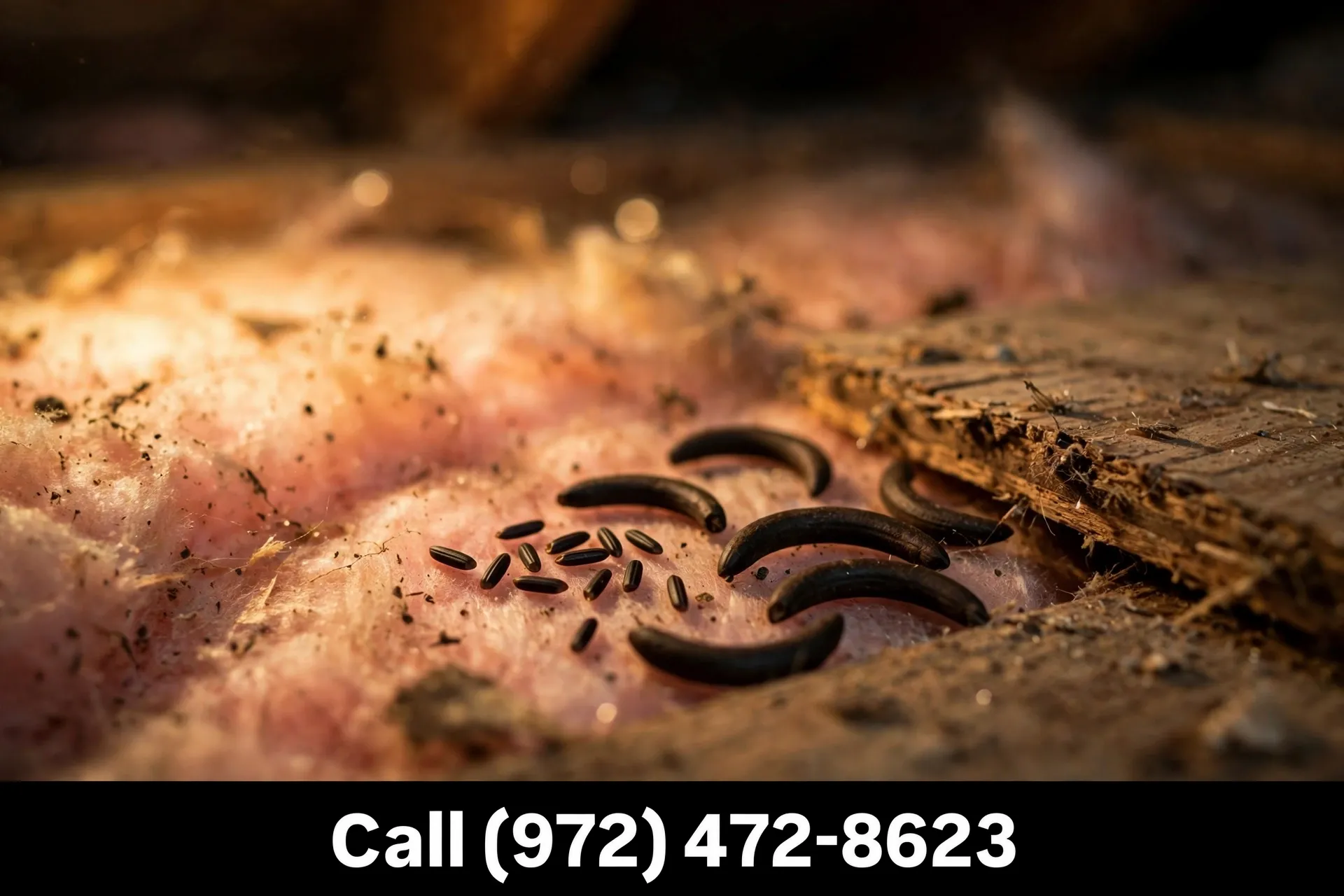
Is It a Roof Rat or a Mouse? The 60 Second Dropping Test
You do not need to see the animal to identify it. Mouse droppings look like grains of rice, about 1/8 to 1/4 inch long with pointed ends, scattered near food in kitchens and pantries. Roof rat droppings are about a half inch long, thicker in the middle, often curved, and they show up overhead on insulation, rafters, and stored boxes. Rice sized droppings in the attic alone do not prove roof rats, since mice nest in attics too, but half inch curved pellets on insulation almost always mean roof rats. A large fresh pile signals an active nest nearby, which is what a technician checks during the signs of a mice infestation inspection.
Gnaw marks confirm it: mice chew dime sized holes, rats chew quarter sized holes with rougher edges. Check pipe penetrations, attic access panels, and soffit vents.
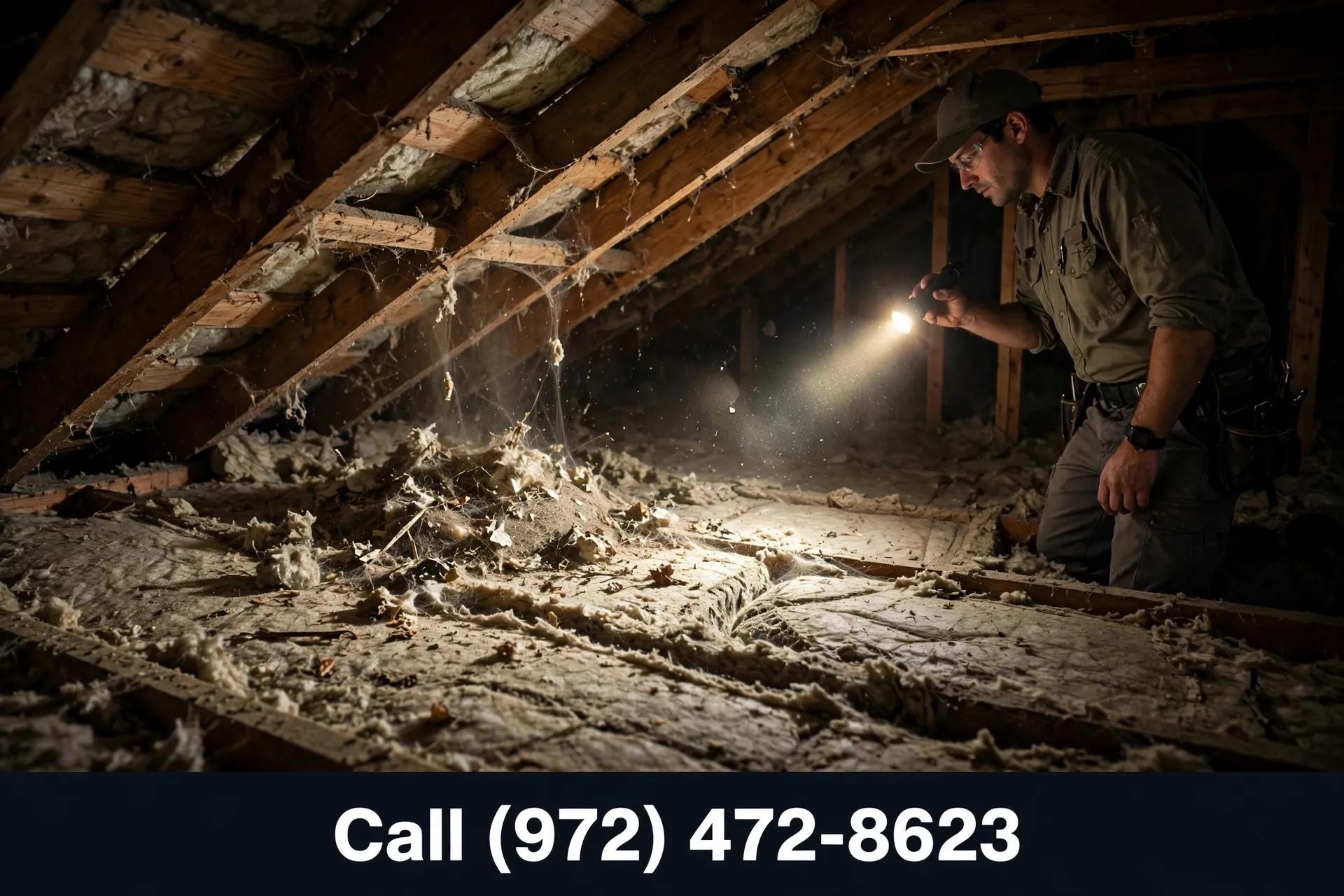
7 Signs You Have Roof Rats (Not Mice) in Grand Prairie TX
One odd noise might be nothing. Together, these seven signs paint a clear roof rat picture that calls for a professional.
- Heavy thumping or gnawing overhead at night. Mice make light quick skittering sounds. Roof rats are far heavier, so their movement sounds like deliberate thumping that carries through the ceiling.
- Half inch curved droppings in the attic. The single most reliable sign. Rice sized pellets point to mice; thick curved half inch pellets point to roof rats.
- Dark grease rub marks along rafters. Roof rats follow the same routes nightly, and oil from their fur leaves dark smudges.
- Quarter sized gnaw holes. Dime sized holes are mice. Quarter sized holes around soffits and vents are rats.
- Flattened trails through attic insulation. Roof rats are heavy enough to compress blown in insulation into visible runways. Mice are too light to leave this trail.
- Fruit, pet food, or bird seed going missing. Roof rats are strong climbers that raid garages, sheds, and outdoor storage, and homes near fruit trees see more activity in fall.
- A strong musky odor in the attic. Rat urine has a sharp ammonia like smell that builds up in enclosed attics. Mouse odor is milder and noticed only in small closed spaces.
Three or more of these means stop guessing. Roof rats chew wiring, a genuine fire risk, and contaminate insulation in ways no store bought trap fixes. A licensed rodent control service in Grand Prairie TX confirms the species on the first visit and plans around roof rat behavior.
Roof Rat vs Mouse vs Norway Rat: Quick Comparison
| Feature | Roof Rat | House Mouse | Norway Rat |
|---|---|---|---|
| Body size | 6 to 8 inches plus a long tail | 2.5 to 3.5 inches plus tail | 7 to 9.5 inches plus a thick tail |
| Droppings | Half inch, curved, tapered ends | 1/8 to 1/4 inch, rice grain, pointed ends | 3/4 inch, thick, blunt ends |
| Where it nests | Attics, rooflines, trees, upper levels | Wall voids, cabinets, near food, low areas | Basements, crawl spaces, burrows, ground level |
| Entry hole size | Quarter sized gaps at the roofline | Dime sized gaps anywhere | Quarter sized gaps at ground level |
| Nighttime noise | Heavy thumping and loud gnawing | Light quick skittering | Heavy movement low in walls |
| Biggest damage risk | Chewed attic wiring, ruined insulation | Contaminated food, chewed packaging | Foundation gnawing, burrow damage |
| Typical pro cost in Grand Prairie | $200 to $500 removal; $300 to $900 exclusion | $150 to $350 removal and sealing | $250 to $550 removal; $400 to $1,000 exclusion |
Roof rat jobs cost more than mouse jobs because the work happens on ladders at the roofline with more entry points to seal. Guessing wrong is expensive: a mouse sized plan leaves the attic colony untouched while the bill keeps growing.
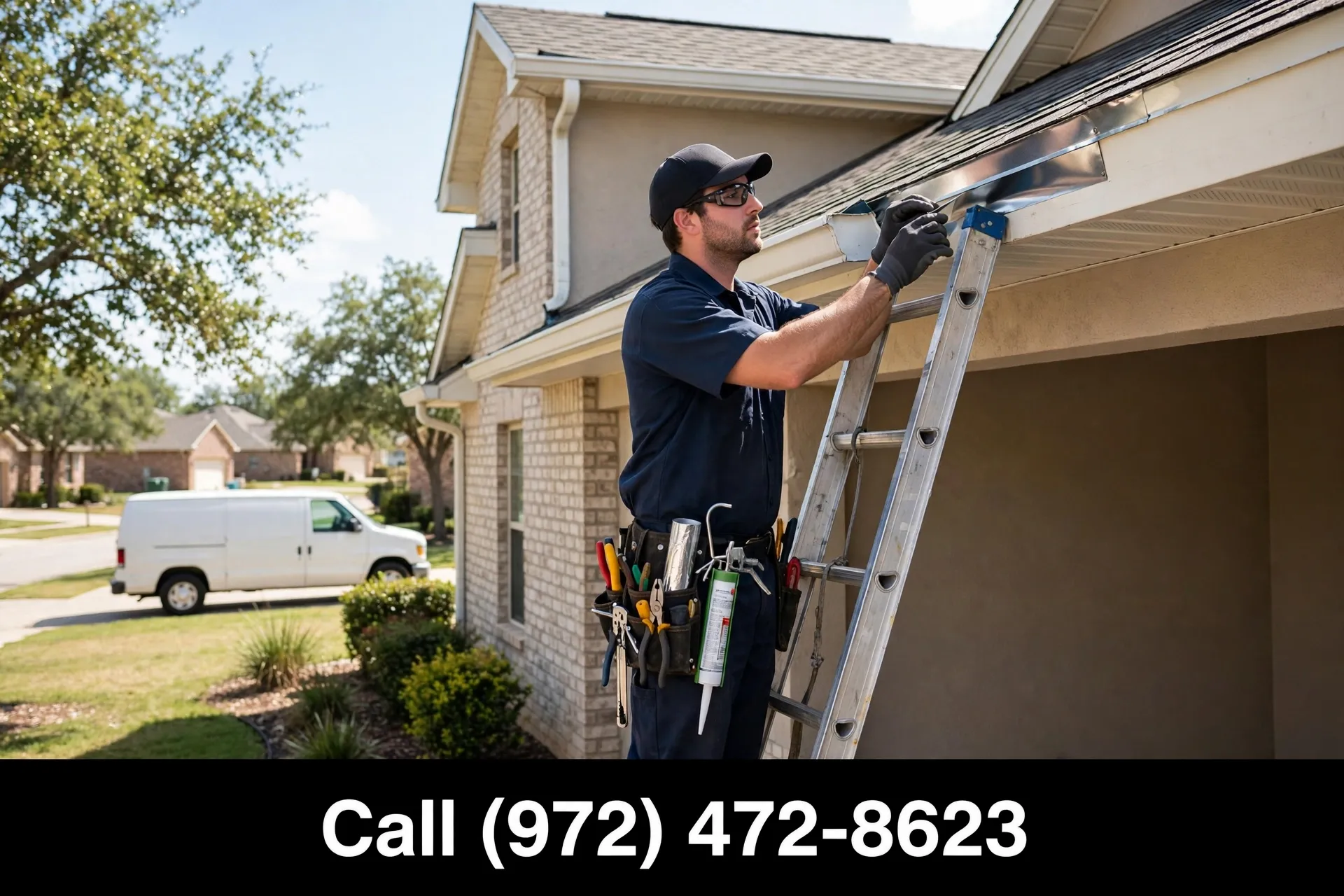
What Does a Roof Rat Exterminator Cost in Grand Prairie TX
Most Grand Prairie homeowners pay $200 to $500 for professional trapping and removal, and $300 to $900 for full exclusion work that seals every entry point. The inspection is usually free or low cost and sets the real number, because no two attics have the same number of gaps. A 2026 pest control cost guide for Grand Prairie TX shows how quotes are built across all pest types: price follows hours on site and the number of entry points.
DIY usually fails with roof rats specifically. Snap traps catch individuals but never address the colony or the entry points, so new rats keep arriving. Loose poison is worse: rats die inside wall voids where you cannot reach them, the odor lingers for weeks, and poisoned rats endanger pets and wildlife. Professionals use secured tamper resistant stations, targeted trapping, and exclusion sealing in that order, which is why the problem actually ends. When the situation is urgent, gnawed wiring or rats in living spaces, an emergency rodent exterminator in Grand Prairie prioritizes the visit the same day.
Important Considerations Before You Book
First, ask whether the quote includes exclusion or only trapping. Trapping without sealing is a subscription to future rats: the attic goes quiet, then new rats follow old scent trails back through the same gaps. A complete job covers removal, sealing, and attic inspection. Second, confirm the technician actually enters the attic and checks the roof, since entry points hide in soffits and vents and a quote written from the driveway is a guess.
Third, ask how the company handles poison. Reputable companies avoid loose poison indoors, use secured stations outdoors, and explain the pet safety plan without being pushed. Fourth, think about timing. Fall is when roof rats push indoors in North Texas, which makes October ideal for rodent proofing before the holidays: seal now and skip the winter attic colony entirely. Finally, get the warranty in writing: if rats chew back through a sealed point inside the warranty period, the return visit costs you nothing.
Roof Rat and Mouse FAQs: Grand Prairie TX
How much does roof rat removal cost in Grand Prairie TX?
Trapping and removal typically costs $200 to $500. Full exclusion sealing usually adds $300 to $900 depending on entry points and whether attic cleanup is needed. The inspection sets the exact number.
Can I get same day rodent service in Grand Prairie?
Yes. Call (972) 472-8623 before noon on a weekday and a technician can usually inspect most Grand Prairie neighborhoods the same afternoon. Chewed wiring or rats in living spaces get priority scheduling.
Will roof rats leave on their own in winter?
No. Cold weather drives them deeper into the attic. A fall colony becomes a winter colony, and by spring the population is larger and the damage worse. October is the best month to remove and seal.
Are roof rats dangerous to my family?
The biggest danger is chewed electrical wiring, a genuine fire risk. They also contaminate insulation and stored items. The property damage is the real threat.
How do roof rats get into the attic?
They climb. Tree limbs touching the roof, vines, fence tops, and utility lines serve as highways to the roofline, where they enter through quarter sized gaps in soffits and vents. Trimming limbs back at least four feet from the roof is the best prevention step.
How long does professional rodent removal take?
Trapping usually clears active animals within one to two weeks, and exclusion sealing takes one to two days of work. Full resolution generally takes two to four weeks from the first visit.
Every week you wait, the colony grows and the repair list gets longer. A same day inspection costs a fraction of a winter attic restoration. Call (972) 472-8623 today, get the species identified correctly, and get a clear quote for removal plus sealing before the next cold snap drives more rats inside.