TL;DR: Carpenter ants do not eat wood. They tunnel through damp or soft wood to build their nests, and the damage grows with every month the colony stays active. This guide covers the 7 warning signs Grand Prairie TX homeowners should watch for, from frass piles and night sounds in walls to winged swarmers indoors. Professional treatment in Grand Prairie TX in 2026 typically runs 200 to 500 dollars, and a single visit can cover baiting, void dusting, and perimeter work. Acting early stops the colony before satellite nests take hold.
October in Grand Prairie TX brings cooler nights, and it pushes carpenter ants indoors in search of moisture damaged wood. Summer leaks under sinks, slow roof drips, and wet window frames give these large ants the soft, damp wood they love for nesting. A single colony can hold thousands of workers, and once satellite nests form in wall voids, foam board, or attic insulation, the problem spreads fast. Fall nests are easier to trace because foraging trails stay active between nests and food sources. Here is how to spot them early, what treatment costs in 2026, and when to call a pro.
Carpenter Ants vs Termites: Know the Difference
Many Grand Prairie homeowners mistake carpenter ants for termites, a mix up that gets costly because treatments differ. If you suspect termites instead, our termite control Grand Prairie TX page explains how pros confirm and treat them.
| Feature | Carpenter Ants | Termites |
|---|---|---|
| Debris clue | Frass piles that look like fine sawdust or small wood shavings beneath kick out holes | Mud tubes along foundations, walls, or crawl space piers |
| Wood damage | Smooth hollow galleries carved into the wood, leaving the surface thin and papery | Rough tunnels packed with mud, eaten along the wood grain |
| Swarmers | Winged ants with narrow pinched waists, bent elbowed antennae, and two different wing sizes | Winged termites with straight thick waists, beaded antennae, and equal sized wings |
| Diet | Do not eat wood, only tunnel through it to nest | Eat wood as their actual food source |
| Sounds | Faint rustling or crackling inside walls at night when the house is quiet | Silent, nothing heard until damage is done |
| Moisture link | Settle in damp soft wood near leaks, sills, and roof edges | Need ground contact or plumbing moisture, tubes rising from soil |
7 Warning Signs You Need a Carpenter Ant Exterminator in Grand Prairie TX
1. Frass piles that look like sawdust. Carpenter ants are tidy nesters. As they carve galleries they push chewed wood and insect parts out of small kick out holes, leaving neat piles of frass under windowsills, along baseboards, or inside sink cabinets. Frass with insect body parts in it means the nest is active right now.
2. Rustling sounds in walls at night. Turn off the TV and press your ear to a suspect wall after dark. Large colonies make a faint rustling as workers move through galleries at night. A rustle that stops when you knock and resumes minutes later is a classic fall sign in Grand Prairie homes.
3. Winged swarmers indoors. Winged ants indoors mean a mature colony has nested in your home for two or three years. Swarmers rarely fly in from outside, so wings or dead swarmers on windowsills point to a nest inside the structure. This is the sign that should move you from watching to calling.
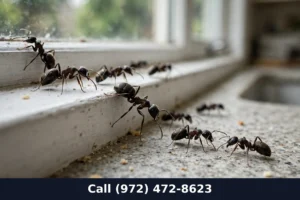
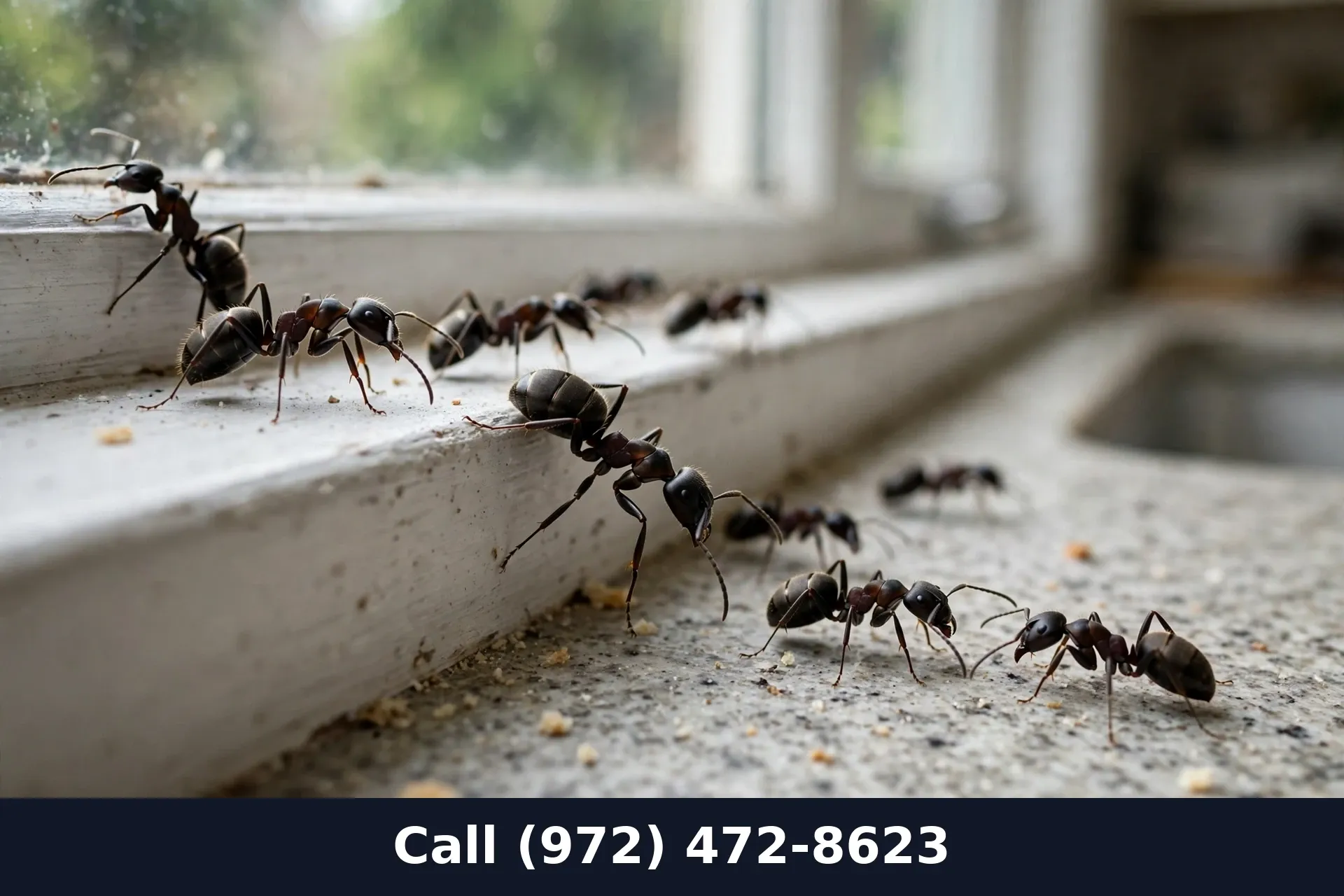
4. Foraging trails day and night. Workers travel in steady trails between the parent nest and food or water. Watch fence tops, tree branches touching the roof, pipes, and countertop edges. If a trail disappears into a wall void or soffit, you have likely found the nest entrance, and a pro can trace it fast.
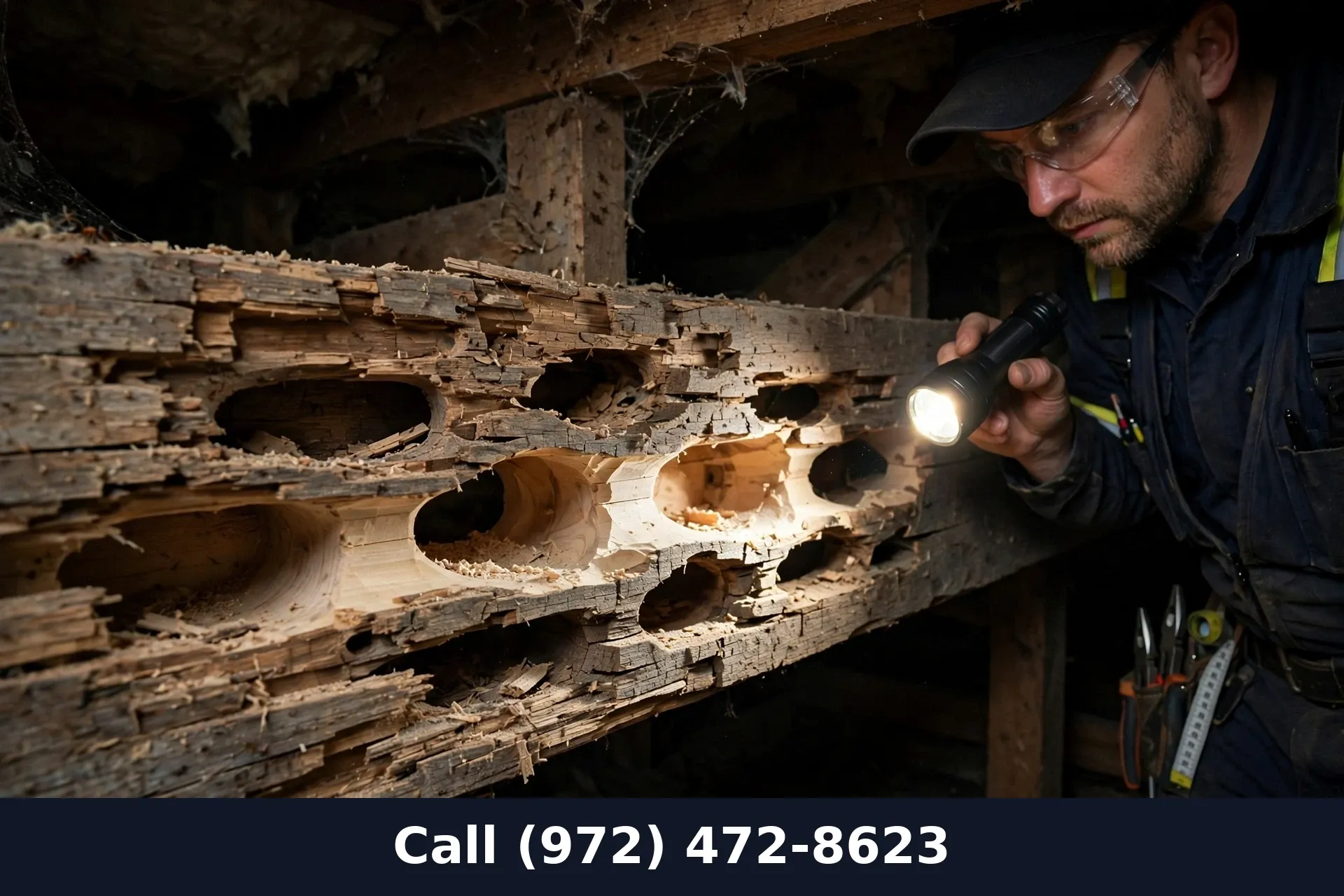
5. Hollow sounding wood. Tap baseboards, window frames, and door frames with a screwdriver handle. Wood that sounds hollow or gives way under light pressure may be tunneled out inside while the surface still looks fine. Compare suspect spots to known solid wood nearby to tell the difference.
6. Moisture damaged wood anywhere. Carpenter ants almost always start in wood softened by moisture. Check under sinks, around tubs and showers, at roof edges and gutters, and on sills that stay wet. Fixing the leak matters as much as treating the ants, because wet wood keeps drawing new colonies season after season.
7. Satellite nests in foam, insulation, or hollow doors. A mature colony runs one parent nest plus satellites in dry spots like attic insulation, foam board, and hollow core doors. Satellites hold workers and pupae but no queen, which is why sprays that kill the workers you see never end the problem. Missing the parent nest guarantees a comeback.
What Does Carpenter Ant Treatment Cost in Grand Prairie TX in 2026
Professional carpenter ant treatment in Grand Prairie TX in 2026 typically costs 200 to 500 dollars for a standard single family home. One accessible nest lands near 200 to 300 dollars, while large homes with multiple satellites or nests in roof structures can reach 400 to 500 dollars. Most pros include the inspection in the price. To compare ant work with other jobs, see our pest control cost Grand Prairie TX guide and our fire ant exterminator cost Grand Prairie TX guide.
That price usually covers locating the parent nest, baiting entry points, dusting wall voids and attic spaces, and treating the perimeter so foragers cannot reenter. Three factors push the price up: multiple satellite nests, poor access that needs drilling or opened wall sections, and moisture damage that needs repair with the ant work. Ask for a written guarantee with a follow up visit, because a one visit job with no warranty is a gamble on a pest that hides this well.

Why Store Bought Ant Baits Fail Against Carpenter Ants
Store bought sprays and baits are built for small sugar ants, not a colony of thousands inside your walls. The classic failure is spraying a visible trail. That kills the foragers you see and alarms the colony, which splits and forms new satellites deeper in the structure. One visible problem becomes two hidden ones.
Baits fail more quietly. Carpenter ants shift food preference through the season, from sweets in spring to proteins in late summer and fall, so the wrong bait sits untouched. Even the right bait fails on a minor trail instead of the main foraging route, or when a satellite keeps producing workers faster than the bait can work. And nothing you buy at a store finds the parent nest, the only target that ends the infestation. When bait after bait comes up empty, a same day exterminator Grand Prairie TX visit can locate the nest with tools and products homeowners cannot buy.
Important Considerations Before You Hire
Before any pro treats, ask for a moisture inspection of the active areas. Treating without fixing the leak that softened the wood is like mopping with the faucet running. Ask the tech to show evidence of the parent nest, not just satellite trails, and get the guarantee in writing. Finally, ask which products they use and why. Non repellent treatments and targeted void dusting beat blanket spraying, and a pro who explains the plan plainly is usually the one who can carry it out.
Carpenter Ant FAQs for Grand Prairie Homeowners
Do carpenter ants bite people? They can bite when handled, and large workers pinch hard enough to break skin. They do not sting or seek out people, but a nest inside bedroom walls is worth treating fast for comfort alone.
How fast does carpenter ant damage spread? A colony grows for years and damage compounds the whole time. One active season can turn a solid sill into papery shell, and satellites multiply the damage zones. Colonies active three years or more often need carpentry repairs alongside pest work.
Can I treat carpenter ants myself? You can reduce foragers with correct baiting, but finding and killing the parent nest is a professional job. Most DIY kills workers while the queen keeps laying eggs in a wall void. If bait shows no drop in activity after two weeks, bring in a pro.
How much does carpenter ant treatment cost? In Grand Prairie TX in 2026, expect 200 to 500 dollars based on nest count, home size, and access. Inspection is usually credited toward the job, and a written guarantee should be part of the quote. Prices far below that range usually mean spot spraying with no nest work.
Will the ants come back next year? They can if moisture problems stay unrepaired or a satellite nest survived treatment. Good service fixes the conditions that invited them and warranties the work through the next swarm season. Annual perimeter service is the simplest long term protection.
How do I prevent carpenter ants after treatment? Keep wood dry by fixing leaks, grading soil away from the foundation, and trimming branches off the roof. Store firewood away from the house and replace rotted trim and fascia. Dry sound wood holds little interest for a nesting queen.
Carpenter ants reward the homeowner who acts early and punish the one who waits. A small nest in a wet sill is a 200 dollar visit. A three year old colony with satellites across the attic is a 500 dollar job plus carpentry bills. Walk your home this weekend, check the seven signs above, and if anything looks familiar, call a local pest control Grand Prairie TX pro.