TL;DR
- Professional fire ant treatment in Grand Prairie TX typically costs $150 to $350 for a one time yard treatment, with full season programs running $300 to $600.
- DIY baits fail most often from midday heat application, watering in, or the colony relocating after disturbance.
- Fire ants sting in groups and each ant can sting repeatedly, so mounds near doors, patios, and play areas are urgent, not cosmetic.
- The professional standard is a two step method: broadcast bait across the whole yard plus targeted mound treatment, which collapses colonies instead of moving them.
- Same day fire ant service is available in most Grand Prairie neighborhoods. Call (972) 472-8623 before noon for afternoon appointments.
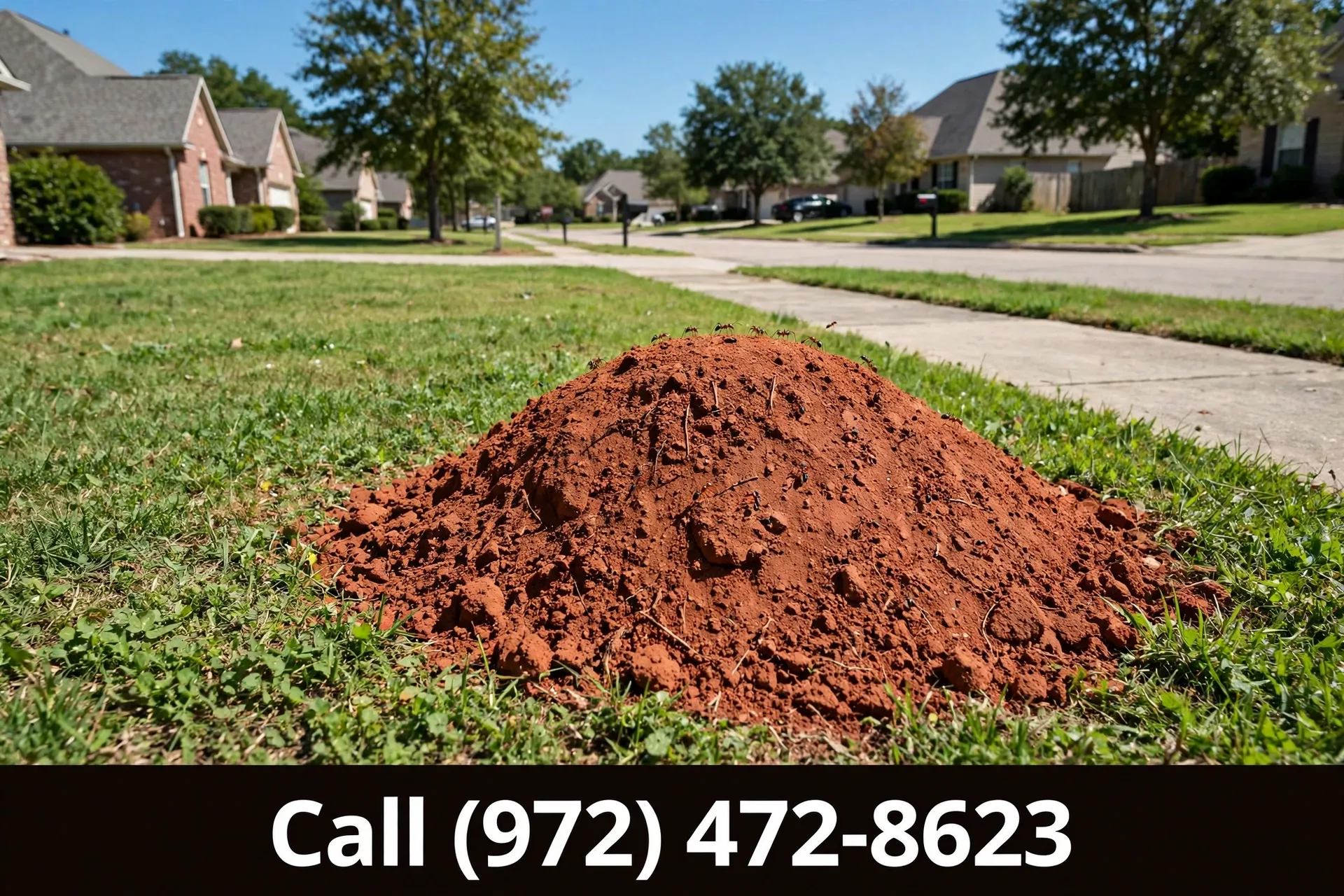
Fire ant mounds appear overnight after fall rains in Grand Prairie, always in the worst spots: by the front door, where the kids play, along the fence where the dog runs. The honest answer on cost: a one time yard treatment typically runs $150 to $350, full season programs run $300 to $600, and same day appointments are available. Call (972) 472-8623 before noon and a technician can usually treat your yard that same afternoon.
What Does Fire Ant Treatment Cost in Grand Prairie TX in 2026
A one time professional fire ant treatment for an average Grand Prairie yard typically costs $150 to $350. A full season program with two to three applications usually totals $300 to $600. These sit inside 2026 Texas market pricing, where one time ant treatments land between $150 and $315 and the average professional ant visit runs about $250. Yard size moves the price most, and a general pest control cost guide explains how quotes are built across all pest types in Grand Prairie.
Ask how the company prices before you book: per visit, per mound, or flat seasonal program. Per mound pricing looks cheap until the technician counts fourteen mounds you never noticed. A flat seasonal program usually wins for larger yards because it covers the follow up visits that fire ant control genuinely needs. Colonies rebound fast in North Texas, and a single application without follow up is the most common reason homeowners pay twice for the same problem.
5 Warning Signs Your Fire Ant Problem Needs a Pro
A single small mound at the back fence might suit careful DIY. These five signs mean the problem has outgrown store bought products.
- Mounds near doors, patios, or play areas. Fire ants defend mounds aggressively and sting in groups. Any mound in the daily path of kids, pets, or guests is a safety issue, not a landscaping issue.
- Five or more mounds across the yard. Multiple mounds usually mean multiple queens or satellite colonies. Spot treating one mound at a time becomes a losing game while the rest keep expanding.
- Someone has already been stung. Fire ant stings cause burning pain and itchy pustules that last days. Once stings happen, the yard is unusable until the colonies are controlled.
- Store bought bait did nothing after two weeks. Correctly applied bait that leaves the mound active after fourteen days points to bait avoidance, wrong timing, or a colony structure that surface bait alone will not collapse.
- Mounds keep reappearing after treatment. The classic sign of budding: the colony sensed the disturbance and split, so killing one mound created two. Professionals prevent this with the two step method below.
Fire ants damage lawns, invade electrical boxes, and send people to urgent care every year. For the full background, see this guide to fire ant control in Grand Prairie TX.
Why Store Bought Fire Ant Baits Fail in Texas
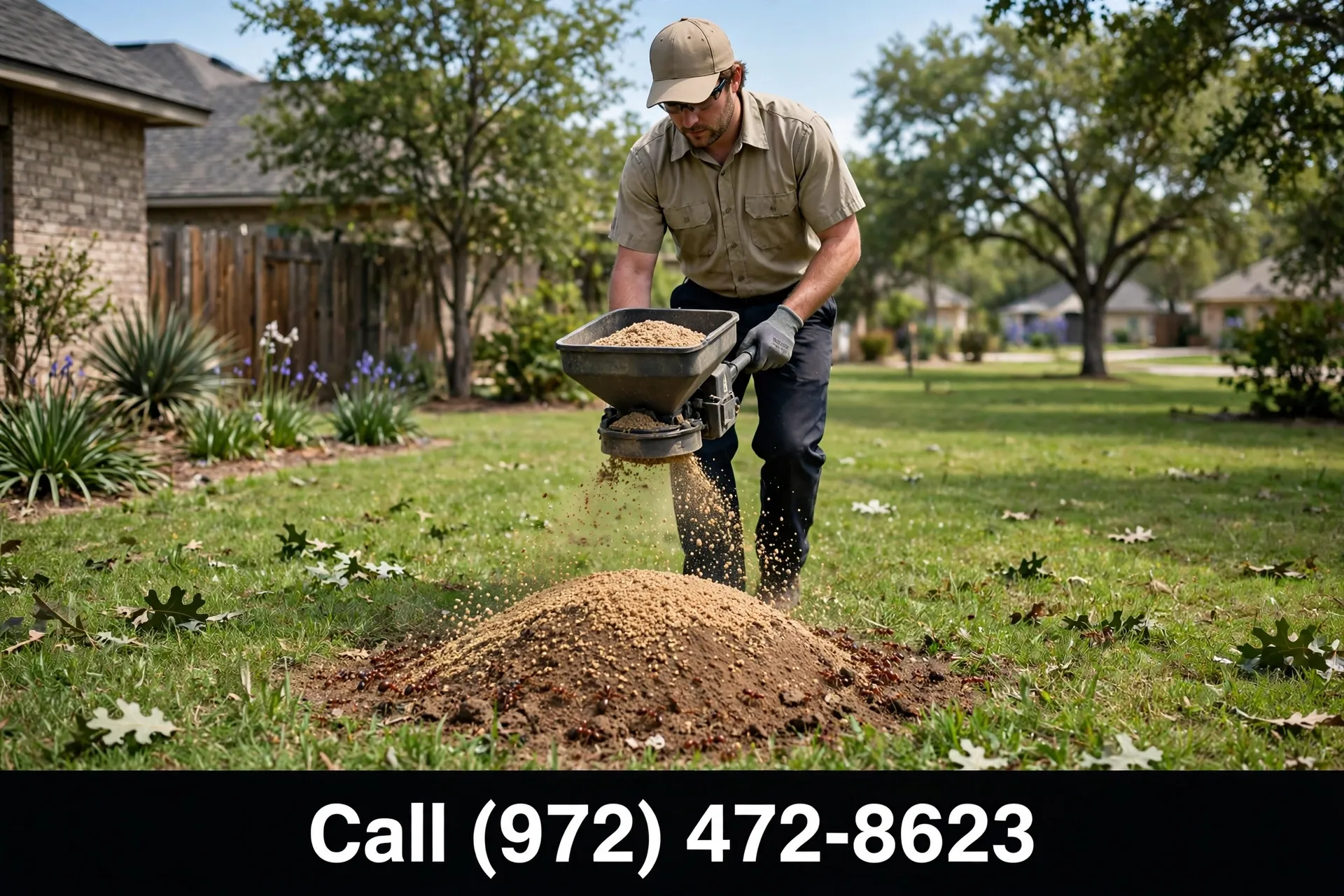
The bait aisle is not a scam, but the margin for error is razor thin and Texas conditions punish every mistake. The number one failure is timing. Fire ants forage most actively when soil temperatures sit roughly between 70 and 95 degrees, usually early morning or late evening. Bait scattered at noon in August heat goes stale before ants find it, and bait applied right before sprinklers run gets watered into the soil where ants ignore it. The number two failure is disturbing the mound first. Poking or drenching it triggers a defense response: the colony moves the queen deeper or buds into satellite colonies nearby, and two weeks later there are three mounds where one stood.
Professional treatment removes the guesswork with the two step method. Step one is broadcast bait spread evenly across the entire yard, which foraging workers carry back to colonies you cannot see, including ones with no visible mound yet. Step two is targeted mound treatment on every active mound, which knocks down the visible population while the bait works through the colony over the following weeks.
DIY vs Professional Fire Ant Treatment: Honest Comparison
| Feature | DIY Baits and Dusts | Professional Exterminator |
|---|---|---|
| Upfront cost | $35 to $165 in products per season | $150 to $350 per visit |
| Time to colony collapse | Often never; mounds relocate | Typically 2 to 6 weeks |
| Treats invisible colonies | No, only mounds you can see | Yes, broadcast bait covers the whole yard |
| Risk of colony budding | High when mounds are disturbed | Low with the two step method |
| Bait matched to season | Guesswork at the store shelf | Selected for current foraging behavior |
| Follow up visits | None, you rebuy and retry | Scheduled re checks included in programs |
| Guarantee | None | Most programs include free re treatment |
Run the math honestly. Spending $60 on bait three times a season costs $180 and usually ends with the same mounds plus new ones. One professional visit at $150 to $350 that actually collapses the colonies can cost less than a season of failed DIY. Homeowners comparing budgets often check cockroach treatment costs in Grand Prairie too, since bundling yard and indoor pests into one plan usually lowers the per visit price.

Important Considerations Before You Book
First, ask whether the company uses the two step method: broadcast bait plus targeted mound treatment. Spot treating only visible mounds is the DIY approach at professional prices, and invisible colonies will rebuild within weeks. Second, ask about pet and kid safety directly: the technician should explain exactly when the yard is usable again. Third, hold off watering for 24 to 48 hours after application, since watering ruins bait performance.
Fourth, think about the whole yard. Fire ants thrive in the same warm season conditions as mosquitoes, which is why many Grand Prairie homeowners bundle treatment with seasonal mosquito control or fold fire ants into a year round Grand Prairie pest control plan at a lower per visit cost. Fifth, time it right: fall treatment knocks colonies down before they overwinter, which makes October one of the smartest months to treat in North Texas. Finally, get the guarantee in writing, including how many weeks of free re treatment it covers.
Fire Ant Treatment FAQs: Grand Prairie TX
How much does professional fire ant treatment cost in Grand Prairie TX?
A one time yard treatment typically costs $150 to $350. Full season programs with two to three applications usually total $300 to $600. Yard size and mound count set the exact number.
Can I get same day fire ant treatment in Grand Prairie?
Yes. Call (972) 472-8623 before noon on a weekday and a technician can usually treat most Grand Prairie yards the same afternoon. Mounds near play areas, doors, and pet zones get priority.
How long does it take for fire ant mounds to die after treatment?
Targeted mound treatments show reduced activity within 24 to 48 hours. Broadcast bait takes longer because workers must carry it to the queen: expect colony collapse in 2 to 6 weeks. Follow up visits matter because this is a weeks long process, not an overnight one.
Is professional fire ant treatment safe for kids and pets?
Modern programs use granular baits at low rates plus targeted mound products, with specific re entry times for treated lawns. Mention pets, vegetable gardens, and play equipment before the visit, and keep pets off treated areas until the stated re entry time passes.
Why do fire ant mounds keep coming back after I treat them?
Three usual reasons: the colony budded and split when the mound was disturbed, the bait was applied at the wrong time or got watered in, or neighboring colonies moved into the empty territory. The professional two step method addresses all three by treating the whole yard.
What is the best time of year to treat fire ants in Texas?
Fall and spring, when ants forage actively and bait uptake is strongest. October treatment is ideal because it knocks colonies down before winter, so spring starts with far fewer mounds.
Every week you wait, queens keep laying and satellite colonies keep spreading, which turns a $200 treatment into a $500 program by spring. Call (972) 472-8623 today for same day fire ant treatment in Grand Prairie TX and get a clear quote before the next rain brings a fresh crop of mounds.