TL;DR: Skunks den under decks, sheds, and porches across Grand Prairie TX, especially in fall when they seek warm shelter, and a single spray can linger for weeks while digging damages foundations and landscaping. Warning signs include a musky odor near the house, cone shaped holes in the lawn, and scratching sounds under the floor at night. Professional skunk removal in Grand Prairie TX typically costs $200 to $500 for live trapping and relocation, with exclusion work adding $150 to $400. Never trap a skunk yourself: the spray, bite risk, and Texas wildlife rules make DIY removal dangerous and often illegal to relocate. Same day help is available. Call (972) 472-8623 for safe professional skunk removal.

Why Do Skunks Den Under Grand Prairie Homes?
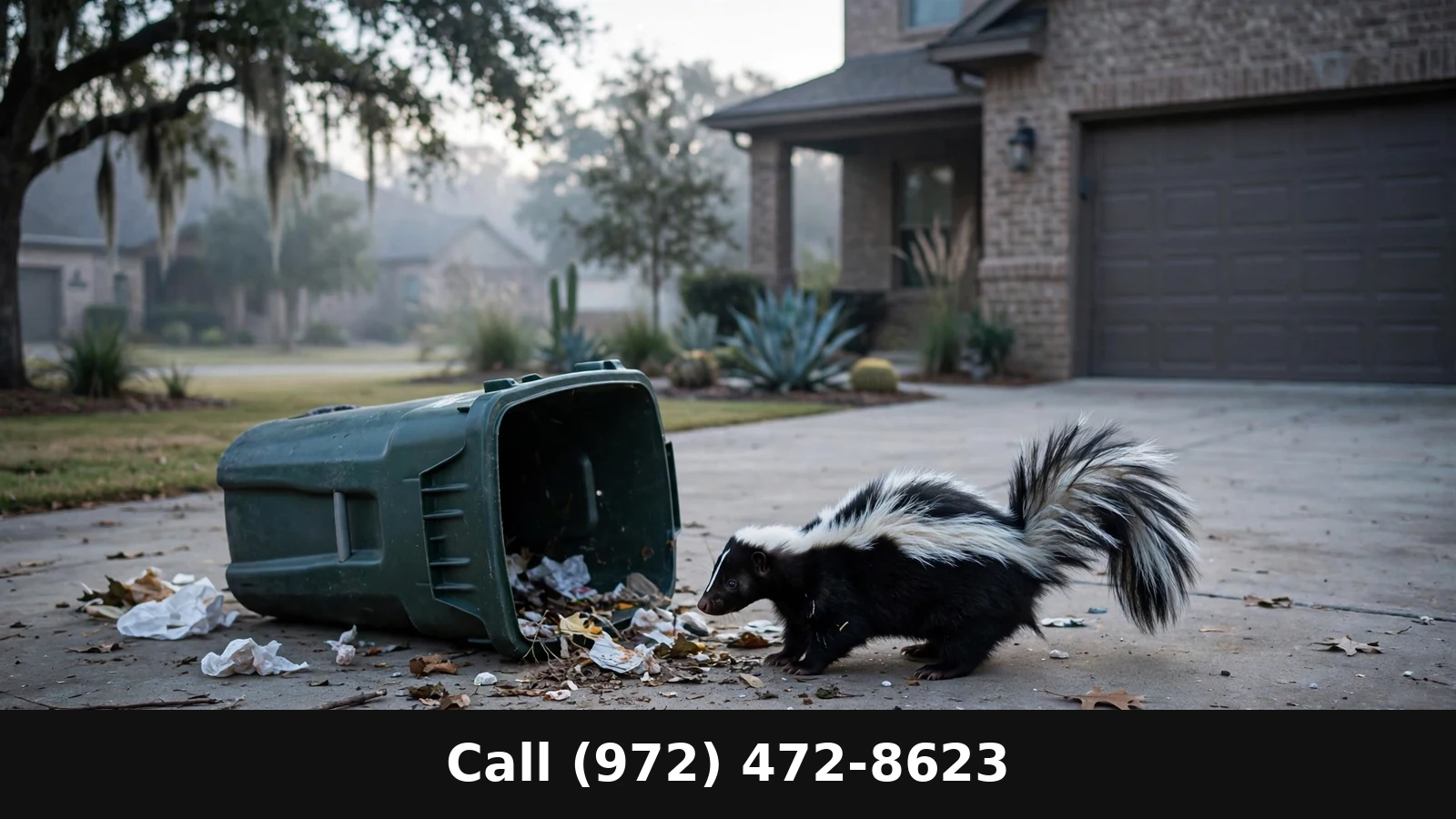
Striped skunks are common across North Texas, and suburban Grand Prairie neighborhoods suit them perfectly. As temperatures drop in fall, skunks look for warm, dry, sheltered dens to wait out cold snaps, and the space beneath your deck, porch, shed, or raised foundation looks ideal to them. Easy food helps too: pet food left outside, unsecured trash cans, fallen fruit, and grubs in irrigated lawns all draw skunks into yards night after night.
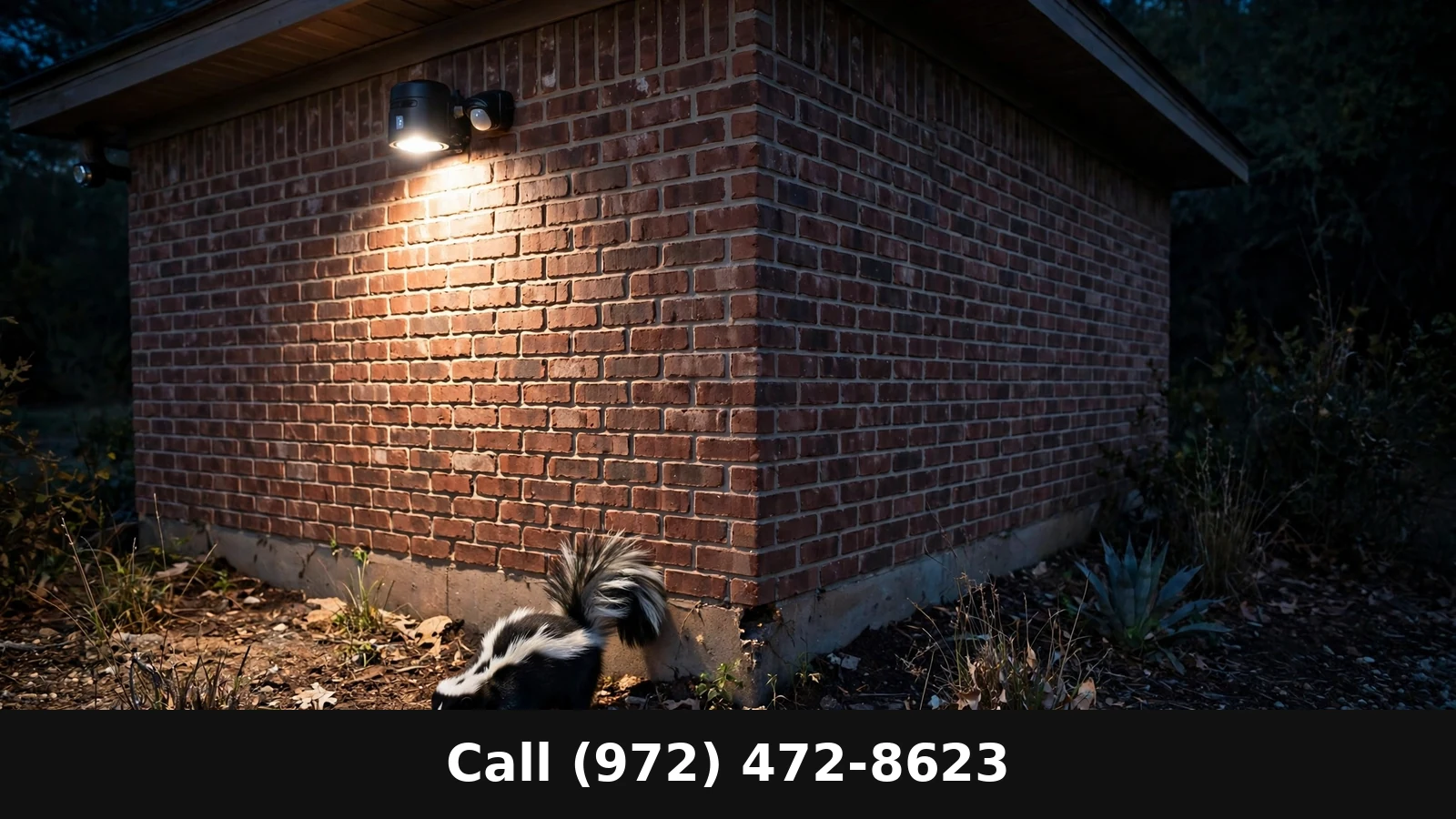
Once a skunk settles in, it digs. Burrow entrances under concrete slabs and wooden structures can widen over weeks, letting in water and other pests and undermining the soil that supports the structure. A wildlife removal specialist in Grand Prairie handles the animal safely and then seals the entry so the next skunk passing through cannot move in.
What Are the 7 Warning Signs You Have a Skunk Problem?
Skunks are nocturnal and secretive, so you will usually smell or hear the evidence before you see the animal. Here are the seven signs professionals look for during a Grand Prairie TX inspection.
| Warning Sign | What It Means | What To Do Next |
|---|---|---|
| Musky odor near the foundation | A skunk is denning or spraying nearby | Do not investigate at night; call a pro |
| Cone shaped holes in the lawn | Skunks digging for grubs and insects | Photograph the pattern for your technician |
| Scratching under the floor at night | An animal is active beneath the structure | Note the times you hear it |
| Burrow openings under decks or sheds | An established den entrance | Keep pets away and do not block it yourself |
| Overturned trash cans | Skunks foraging for easy food | Secure lids and bring pet food indoors |
| Five toed tracks in soft soil | Skunk footprints near the den | Mark the area and mention it on the call |
| Pet sprayed or barking at the deck | Direct encounter with a skunk | Wash the pet outside and call for removal |
How Much Does Skunk Removal Cost in Grand Prairie TX in 2026?
Skunk removal pricing depends on whether trapping, exclusion, or both are needed, plus how many animals are involved and how hard the den is to reach. Typical 2026 pricing from licensed Grand Prairie TX wildlife professionals is shown below.
| Service Type | Typical Cost Range | Best For |
|---|---|---|
| Inspection and assessment | Free to $99 | Confirming the animal and den location |
| Live trapping and legal relocation | $200 to $500 | One skunk denning under a structure |
| Additional animal trapped | $75 to $150 each | Multiple skunks or a mother with young |
| Exclusion and entry sealing | $150 to $400 | Keeping skunks and other wildlife out for good |
| Odor treatment after spraying | $100 to $250 | Skunk spray under the house or in the crawl space |
Most jobs combine trapping with exclusion, because removing the current skunk without sealing the den just opens a vacancy for the next one. If a skunk has sprayed beneath your home, ask about enzyme based odor treatment during the same visit to avoid paying for a second trip. Skunk jobs often reveal other wildlife pressure, so it helps to know the signs of raccoon activity and squirrels in the attic too.
Is Skunk Removal Dangerous to Do Yourself?
Yes, for three reasons. First, a cornered skunk sprays, and that oily musk can soak into siding, decking, soil, and your clothing and linger for weeks. Second, skunks can carry rabies, and any bite or scratch means a stressful round of medical evaluation. Texas classifies skunks as rabies vector animals, so handling them without training and proper equipment is a genuine health risk.
Third, the law complicates DIY relocation. Texas Parks and Wildlife rules restrict how and where certain wildlife can be released, and dumping a trapped skunk in a park or rural roadside can violate state regulations and simply move your problem onto someone else. Live traps sold online also catch neighborhood cats, opossums, and raccoons, leaving you with an animal you never intended to handle. A licensed professional carries the right traps, protective gear, and knowledge of legal release requirements, which is exactly what you are paying for. For full property protection, pair removal with a year round pest control plan in Grand Prairie that monitors for reentry.
How Do Pros Remove Skunks Safely?
Professional skunk removal follows a careful sequence designed to get the animal out without a spray event and keep it out permanently.
Step 1: Inspection. The technician finds every den entrance, confirms the species from tracks and digging patterns, and checks for babies, which changes the timing and method completely.
Step 2: Strategic trapping. Live cage traps are placed on the skunk’s travel routes and baited appropriately. Pros use techniques that calm the animal and minimize spray risk, and they check traps on a strict schedule.
Step 3: Legal relocation or release. The skunk is transported and released according to Texas wildlife regulations, far enough away that it will not return.
Step 4: Exclusion. Every entry point gets sealed with galvanized steel mesh or similar animal proof materials, often buried in an L shape to stop digging. This is the step DIY efforts skip and the reason skunks come back. The same exclusion first approach used in rodent control in Grand Prairie applies here, with mesh sized and buried for wildlife rather than for mice alone.
Step 5: Cleanup and prevention. Soiled insulation or nesting material is removed, odor treatment is applied if needed, and attractants like pet food and open trash are addressed with the homeowner.
Important Considerations Before You Hire
Wildlife work is not the same as insect spraying, so vet the company carefully. Confirm they hold the appropriate Texas licenses for nuisance wildlife control, not just a general pest license. Ask whether the quote includes exclusion or only trapping, because trapping alone is a temporary fix. Ask how they handle mothers with babies, since separating them creates suffering and often a second service call. Get the warranty in writing: reputable companies guarantee their exclusion work for at least one year. Finally, ask about their trap check schedule, because a trapped animal should never sit overnight in Texas heat. When a skunk is active under a lived in home, same day exterminator help in Grand Prairie can start trapping without waiting for the next routine visit. If you manage a rental or HOA property, ask about documentation you can share with tenants or the board.
Skunk Removal FAQs Grand Prairie Homeowners Ask
What should I do if my dog gets sprayed by a skunk?
Keep the dog outside, check the eyes for redness and rinse them with clean water, then wash with a mix of hydrogen peroxide, baking soda, and dish soap. Avoid bringing the dog indoors until the smell is mostly gone, and call a wildlife pro so it does not happen again.
Will a skunk leave on its own?
Sometimes a transient skunk moves through in a night or two. But a skunk that has dug a den under your deck or shed has chosen the spot and will stay for weeks or months, and may return next season. Active denning needs professional removal plus exclusion.
Can skunks damage my foundation?
They do not chew concrete, but persistent digging removes supporting soil from under slabs, porches, and shed footings, which can lead to settling and water intrusion. The longer the den is active, the worse the undermining gets.
Is it legal to trap a skunk myself in Texas?
Trapping on your own property is generally allowed, but relocation is restricted and must follow Texas Parks and Wildlife regulations. Improper release can be illegal, and handling a rabies vector species without training is unsafe. Most homeowners are better served by a licensed professional.
How do I keep skunks out of my yard for good?
Seal den sites with buried galvanized mesh, secure trash cans with locking lids, bring pet food indoors at night, remove fallen fruit, and treat grub heavy lawns that attract foraging skunks. Exclusion plus attractant removal is the lasting formula.
How long does professional skunk removal take?
Trapping usually resolves within three to seven days depending on the skunk’s habits, and exclusion is completed in the same visit window. Odor treatment, if needed, adds one more short appointment.