
TL;DR: Why Do Ants Invade Grand Prairie Homes in Spring?
Ants become more active in Grand Prairie, TX during spring because warmer temperatures increase foraging, colony activity, and reproduction. Moisture, food, landscaping, cracks, and small entry points can make homes especially attractive.
The most important step is not simply killing the ants you see. You need to identify where they are entering and where the colony is located. Texas A&M AgriLife Extension recommends focusing on exclusion, sanitation, moisture control, and proper identification because different ant species require different treatment approaches.
Why Are Ants Suddenly Everywhere in Grand Prairie?
Spring changes the conditions around your home. As temperatures rise, ants become more active and start searching for food, water, and suitable nesting locations.
That is why a home that seemed completely ant-free during winter can suddenly develop trails along kitchen counters, windows, doors, bathrooms, or exterior walls.
Fire ants also become easier to notice during spring because they become more active and build visible mounds. Texas A&M notes that spring is a good time to manage fire ants because they are actively searching for food and building mounds.
What Attracts Ants to Grand Prairie Homes?

Food Is One of the Biggest Attractions
Ants are excellent food hunters. A few crumbs, spilled drinks, pet food, or sticky residue can create a reliable food source.
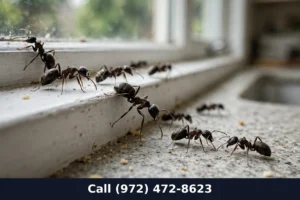
Once worker ants discover food, they can establish a trail between the food and their colony. That trail can make it seem like hundreds of ants appeared overnight.
Keeping counters clean and storing food in sealed containers can reduce these attractions. However, sanitation alone may not solve an established infestation if ants are nesting inside walls, around foundations, or near the property.
Moisture Can Create Ant-Friendly Conditions
Water is another major factor.
Leaking faucets, plumbing problems, roof leaks, poor drainage, damp wood, and excessive moisture around the foundation can create conditions that support certain ant species.
This is especially important with carpenter ants. Texas A&M explains that moisture is an important factor in attracting and sustaining carpenter ants in structures. They commonly use damp or previously damaged wood for nesting.
Landscaping Can Create a Bridge Into Your Home
Trees, shrubs, mulch, firewood, landscape timbers, and other outdoor materials can provide ants with shelter close to the house.
Branches touching the roof or exterior walls can also provide a convenient pathway. Carpenter ants may move from trees or other outdoor nesting locations into structures through cracks, utility lines, ventilation openings, and other access points.
Which Ants Commonly Invade Homes?
Not every ant problem is the same. Identifying the species can change the most effective control strategy.
| Ant Type | Common Concern | What to Watch For |
|---|---|---|
| Carpenter ants | Indoor nesting and moisture problems | Large ants, sawdust-like debris |
| Fire ants | Outdoor mounds and painful stings | Mounds in lawns and landscaping |
| Pharaoh ants | Persistent indoor infestations | Small ants and recurring trails |
| Other house ants | Food and moisture attraction | Trails around kitchens and entry points |
Carpenter ants deserve particular attention because their presence can sometimes point toward moisture or deteriorating wood. They do not eat wood like termites, but they excavate galleries to create nesting areas.
Why Do Ants Enter the House Instead of Staying Outside?
Ants do not necessarily enter homes because something is wrong with the property. Your house simply offers resources they need.
During warmer weather, workers may explore larger areas looking for food and water. A tiny opening around a window, pipe, door, foundation, or utility line can be enough for some species to enter.
Texas A&M’s housing pest guidance recommends identifying entry points and using exclusion measures such as caulking and door sweeps where appropriate.
Why Spraying the Ants You See May Not Solve the Problem
This is one of the biggest mistakes homeowners make.
You see a trail, spray the ants, and watch the activity disappear. Then the ants return a few days later.
Why?
Because the visible workers may only represent a small part of the colony. Killing workers at the surface does not necessarily eliminate the nest or queen.
Texas A&M notes that effective carpenter ant control requires locating the parent colony and satellite colonies. Treatment depends on where those colonies are located.
How Can You Prevent Spring Ant Problems?
Start With Food and Water
Clean spills quickly, store food securely, keep pet food areas clean, and remove garbage regularly.
Then look beyond the kitchen. Check bathrooms, laundry areas, garages, patios, and exterior walls for moisture sources.
Seal Common Entry Points
Inspect areas around:
- Doors and windows
- Foundation cracks
- Utility penetrations
- Pipes
- Vents
- Garage doors
- Exterior wall openings
Sealing appropriate gaps can make it harder for ants to enter.
Manage Landscaping Around the Home
Trim branches that touch the structure. Keep firewood and wood debris away from the house. Remove dead stumps when practical and avoid allowing excessive moisture to remain against the foundation.
These steps are particularly useful for reducing conditions that support carpenter ants.
When Should You Call a Pest Control Professional?
You should consider professional ant control in Grand Prairie when ants keep returning after basic prevention, appear in multiple rooms, emerge from walls or ceilings, or are accompanied by signs of moisture or damaged wood.
Repeated trails can indicate that the problem is larger than the ants visible on your countertop.
A professional inspection can help determine the species, locate entry points, identify possible nesting areas, and determine whether moisture or structural conditions are contributing to the infestation.
What Should Grand Prairie Homeowners Do When Ants Appear?
Start by watching the trail instead of immediately spraying everything you see.
Where are the ants coming from? Where are they going? Are they entering through a window, wall opening, foundation crack, or door? Are there moisture problems nearby?
These observations can help identify the source.
If the activity continues, professional pest control in Grand Prairie can provide a more complete assessment and treatment plan.
Important Considerations Before Treating Ants
Ant control is not a one-size-fits-all problem.
Some ants are primarily nuisance pests, while others can indicate moisture issues or create more persistent problems. Using the wrong product or treating only visible workers can sometimes make control harder. Texas A&M specifically warns that improper chemical treatment can cause certain ant species, including Pharaoh ants, to form multiple colonies.
That is why ant identification comes first.
A targeted approach is usually more useful than repeatedly spraying wherever ants appear.
Conclusion
Spring ant activity in Grand Prairie homes is usually driven by increased insect activity, food availability, moisture, nesting opportunities, and easy access into buildings. Warmer conditions encourage ants to forage and establish trails, making infestations much easier to notice.
The best long-term strategy combines sanitation, moisture control, landscaping maintenance, entry-point exclusion, and species-specific treatment. If ants continue returning, finding the colony or the conditions supporting it is more important than simply killing the visible workers.
FAQs About Spring Ants in Grand Prairie
Why do ants suddenly appear in my Grand Prairie home during spring?
Warmer weather increases ant activity and encourages workers to search for food, water, and nesting locations. Small openings around the home can give them easy access.
Are carpenter ants dangerous to Grand Prairie homes?
Carpenter ants do not eat wood like termites. They excavate wood to create nesting galleries. Their presence can sometimes indicate moisture, rot, or previously damaged wood.
Why do ants keep coming back after I spray them?
The visible ants may only be workers. If the colony remains hidden, new workers can continue entering the home.
How can I keep ants out of my house?
Reduce food and moisture sources, seal entry points, trim vegetation touching the structure, and keep wood debris away from the home.
Should I get professional ant control if I only see a few ants?
Not necessarily. A few occasional ants may not indicate a major infestation. However, repeated trails, ants appearing from walls, winged ants indoors, or recurring activity can justify a professional inspection. Texas A&M notes that winged carpenter ants indoors can indicate a nest within the structure.