
TL;DR
- Yellowjackets turn aggressive in October as colonies peak and natural food runs short.
- A wasp nest becomes an emergency when it is inside wall voids, near doors or play areas, growing fast, or threatening someone with a sting allergy.
- Never spray an active nest at midday and never seal its entrance; both provoke attacks.
- Emergency service means same day dispatch, protective gear, and treatment during the calm window of early morning or dusk.
October in Grand Prairie brings cooler evenings and wasps with short tempers. Yellowjacket colonies are at their largest, natural food is running out, and workers get bold and defensive. A nest that seemed harmless in July can become a genuine hazard by October, especially over a doorway or inside a wall.
Not every nest needs an emergency call, but some absolutely do. This guide covers the warning signs that mean act today, the mistakes that turn a nest into an attack, what emergency service looks like, and how to keep wasps from coming back. If wasps are entering your home or someone nearby has a sting allergy, call (972) 472-8623 now instead of reading further.
Why Wasps Get So Aggressive in October
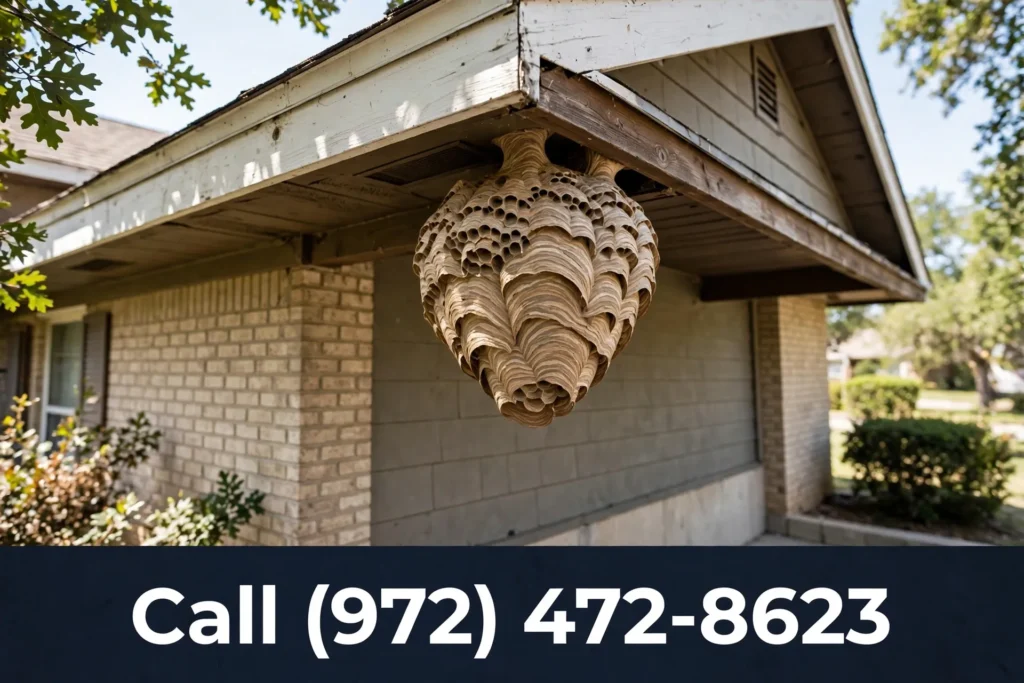
Through spring and summer, a yellowjacket colony grows steadily on insects and nectar. By early fall the nest holds its maximum population just as natural food dries up, and hungry workers switch to scavenging: picnic tables, trash cans, pet food bowls, and sugary drinks.
Meanwhile the colony starts raising next year’s queens and workers turn fiercely defensive. Vibrations from mowers, slammed doors, or kids playing nearby can trigger a mass defensive response. Unlike honeybees, yellowjackets sting repeatedly, which is why a disturbed late season nest sends multiple people to urgent care every year. For the full picture of professional handling, see our page on professional wasp removal.
5 Signs You Need Emergency Wasp Removal
Call for same day service if any of these describe your situation.
1. The Nest Is Inside a Wall Void, Attic, or Soffit
Steady buzzing inside walls, wasps slipping through a vent or window frame, or a stained patch on drywall all point to a hidden nest. Wall void nests are emergencies: you cannot see the colony size, trapped wasps chew through drywall into living spaces, and do it yourself attempts just anger them. Mark the entry point from a safe distance and keep the room closed off until a professional arrives.
2. Someone in the Home Has a Sting Allergy
If anyone in the household has a known sting allergy, treat every nest near the home as urgent regardless of size. This is general safety guidance, not medical advice: if a sting causes trouble breathing, swelling of the face or throat, or dizziness, seek medical care immediately.
3. The Nest Sits Near Doors, Driveways, or Play Areas
Location decides danger. A nest above your front door, beside the garage, over a patio, or near a swing set puts kids, pets, and visitors in the flight path every day. Nests near entryways that children and pets use deserve emergency priority, because daily traffic makes a disturbance almost certain.
4. The Nest Is Growing Fast or Multiplying
A nest that was golf ball sized in August and is now football sized is in peak growth and will only get more defensive. Multiple new nests around one property signal ideal nesting conditions. Fast growth in October means maximum wasp numbers with minimum patience.
5. Wasps Are Getting Inside the House
Wasps appearing indoors with no open window to explain them usually means a nest in a wall void, attic, or chimney with an interior breach. Indoor wasps are disoriented and sting easily. Note where you see them and let the technician find the breach; do not track the source yourself.
What NOT to Do With an Active Wasp Nest
Most wasp injuries happen during do it yourself attempts. These are the mistakes our technicians see every fall.
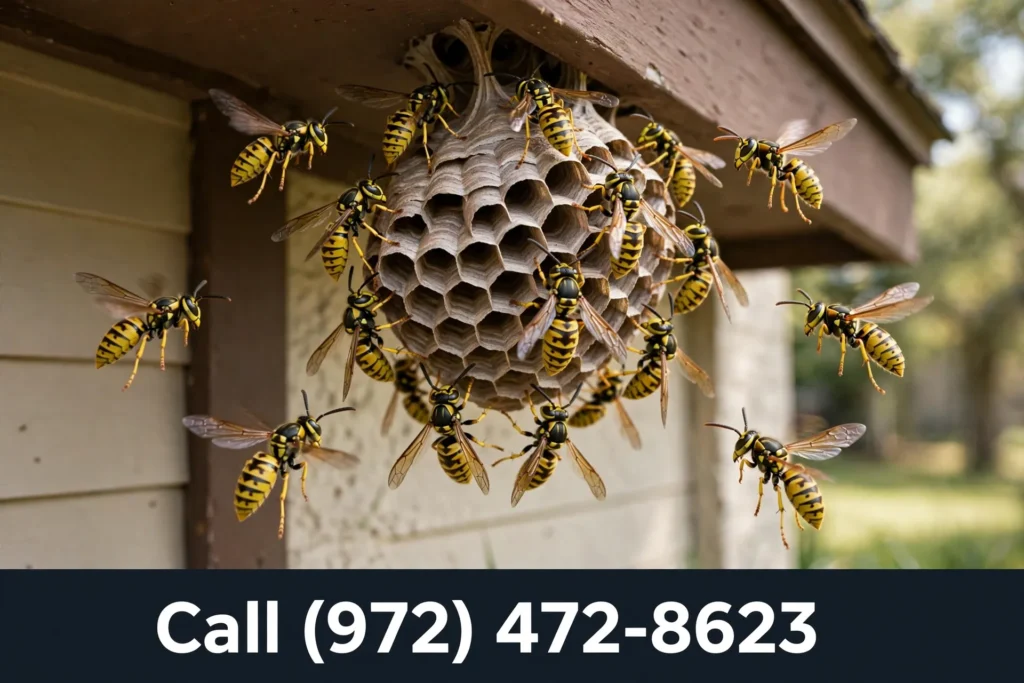
Do not spray the nest at midday. Store bought sprays suit small, visible nests treated at dusk, and even then they fail on large or hidden colonies. Spraying at midday, when the most foragers are home and alert, turns a contained nest into a defending swarm. Foaming half the entrance and leaving the rest angry is worse than doing nothing.
Never seal the nest entrance. Trapped yellowjackets chew new exits, often straight through drywall into bedrooms. A sealed exterior nest becomes an interior infestation, far more dangerous and expensive to resolve.
Do not knock the nest down with a hose, broom, or ball, and never stand on a ladder next to an active nest; a defensive swarm plus a ladder is how falls and multiple stings happen together. Keep children and pets indoors until it is handled. We also handle nests across the metroplex; read about our wasp removal in Dallas TX.
What Emergency Wasp Service Looks Like
When you call (972) 472-8623 for emergency wasp removal, active nests near living spaces get priority dispatch, and same day service is the standard for true emergencies in Grand Prairie.
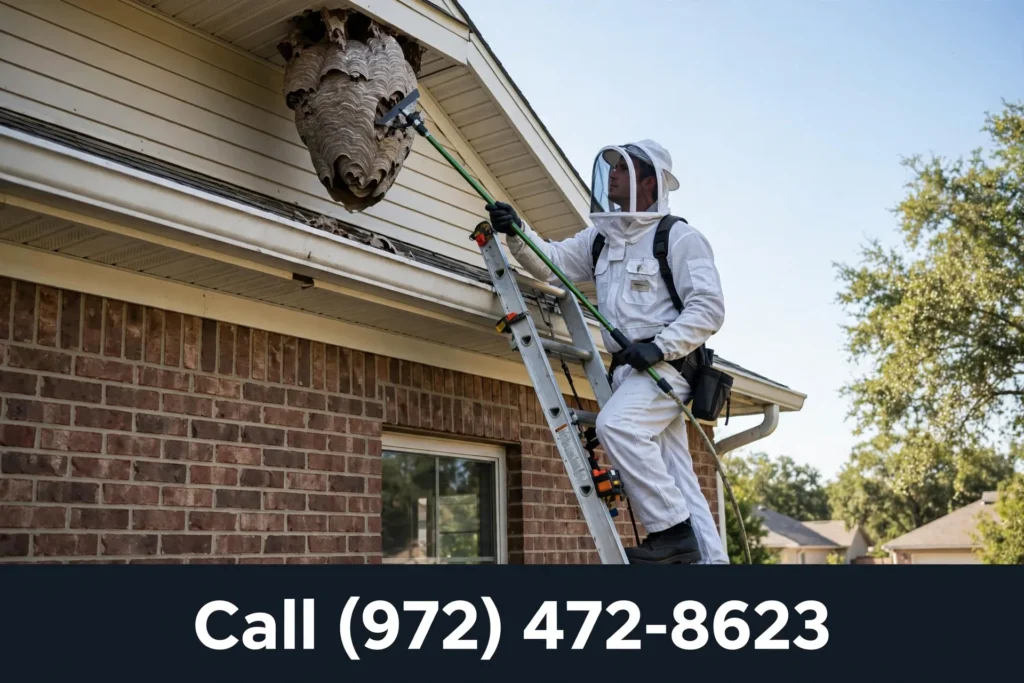
The technician arrives in full protective gear: sealed veil, sting proof suit, and gloves. That gear lets the technician work calmly and completely instead of rushing, which finishes the colony instead of scattering it. Treatment happens during the calm window of early morning or dusk, when most foragers are home, with a professional dust or targeted application going directly into the nest entrance so the whole colony, including the queen, is reached.
Then comes the removal versus treatment decision. Accessible paper nests under eaves are usually removed entirely after activity ends, eliminating the pheromone markers that attract future queens. Hidden wall void nests are treated in place and monitored, with the entry sealed only after the technician confirms the colony is dead. You get clear aftercare either way: how long to avoid the area, when it is safe to seal gaps, and what to watch for. Commercial properties face wasp pressure around loading docks and dumpsters too, as we discuss in our article on warehouse pest challenges in Grand Prairie. Nearby homeowners can also reach our exterminator in Arlington TX for same day nest service.
How to Keep Wasps From Coming Back
Removal solves today; prevention protects next season. Keep outdoor trash in sealed cans, rinse recyclables, cover compost, and never leave pet food outside overnight. Seal gaps around eaves and siding, repair torn screens, and cap the chimney.
Trim back branches and shrubs that touch the house, since they bridge to eaves and rooflines. In late summer, check under eaves, deck railings, and play structures for walnut sized starter nests; small nests caught early are simple to handle. Skip the folk remedies: paper decoy nests and essential oil sprays have no reliable evidence behind them.
If your property grows a nest every year, schedule a late summer inspection before the colony peaks. One preventive visit costs far less in stress than an October emergency.
Emergency Wasp Removal FAQs
How do I know if a wasp nest is an emergency?
It is an emergency when the nest is inside a wall or attic, near a door or play area, growing fast, letting wasps indoors, or threatening someone with a sting allergy. A small quiet nest far from foot traffic in an unused corner of the yard can usually wait for a scheduled visit.
Can I remove a wasp nest myself?
We do not recommend it for active or large nests. Late season yellowjackets defend aggressively and sting repeatedly, and hidden nests cannot be fully reached with store products. A small, clearly abandoned paper nest in winter is the only safe do it yourself case, and even then a professional eye is worth it.
What time of day is safest for wasp removal?
Professionals treat nests in early morning or at dusk, when foragers have returned and the colony is calm. Homeowners should not attempt treatment at any hour; midday is worst.
Will wasps come back after the nest is removed?
New queens can start fresh nests nearby the next season if conditions stay attractive. Full nest removal eliminates the old pheromone markers, and sealing entry points plus removing food attractants makes your property far less inviting for the next colony.
Are yellowjackets more aggressive in fall?
Yes. Colonies peak just as natural food declines, so workers scavenge aggressively and defend fiercely while new queens are raised. October is consistently the worst month for yellowjacket encounters in North Texas.
Does Exterminator Grand Prairie offer emergency wasp removal?
Yes. We provide same day emergency wasp removal across Grand Prairie TX, including nests in wall voids, attics, eaves, and yards, with technicians in full protective gear treating the colony during the calm window.
How fast can Exterminator Grand Prairie remove a wasp nest?
Emergency calls get same day dispatch in Grand Prairie. Call (972) 472-8623, describe the nest location and activity level from a safe distance, and we will get a technician out quickly with the right equipment for your situation.
A wasp nest does not improve with time, and October nests only get angrier. If you see the warning signs above, do not wait for a sting to force the decision.

One Response