
TL;DR
- Warehouses and distribution centers attract rodents, cockroaches, stored product pests, and birds because they offer food, shelter, water, and constant door traffic.
- Texas heat pushes pests toward cool interiors, and loading dock doors that stay open for hours give them a clear path inside.
- Failed inspections and audit findings cost far more than a prevention program ever will.
- Bait stations, glue boards, and pheromone traps catch activity early when they are placed on a map and checked on a schedule.
- Exclusion, sanitation, and door discipline prevent more infestations than sprays alone.
- A licensed commercial pest service adds documentation, trend reports, and audit ready records your team can hand to any inspector.
This warehouse pest control Grand Prairie guide is written for facility managers who run warehouses and distribution centers, because these are buildings that pests find deeply attractive. Dock doors open and close all day, pallets arrive from across the country, and racking stretches farther than the eye can see. Add long Texas summers, and rodents, cockroaches, stored product pests, and birds can settle in before anyone notices. From entry points and monitoring to audits and exclusion, here is what you need to protect inventory and pass inspections.
Why Warehouses and Distribution Centers Attract So Many Pests
A warehouse gives pests everything they need in one place. Spilled grain, pet food, packaging glue, and break room trash supply food. Pallets, racking, and clutter supply shelter. Dock leveler pits and condensation supply water. With freight moving in and out around the clock, new pests arrive with nearly every shipment.
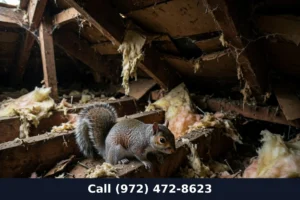
Rodents are usually the first concern. House mice nest inside pallet stacks and wall voids, while roof rats travel along racking and utility lines. Their droppings contaminate product and packaging, and their gnawing damages wiring. Cockroaches come next, especially American cockroaches near dock levelers and German cockroaches in break rooms. Cardboard is both food and harborage, which is why receiving areas deserve close attention. Stored product pests such as Indian meal moths arrive in inbound freight and spread pallet to pallet, while pigeons and sparrows nest in rafters where their droppings damage inventory.
How Texas Heat and Loading Dock Doors Multiply the Problem
Summer temperatures across the Dallas Fort Worth area regularly climb past 100 degrees, and that heat changes pest behavior. Rodents and roaches move toward cooler interiors, and insects push through every available gap. During busy receiving windows, dock doors can stay open for hours, and worn seals, damaged brush guards, and debris filled leveler pits remove what little barrier remains. Night deliveries add risk because many pests are most active after dark, exactly when fewer employees are watching the doors. Air curtains help with flying insects but do nothing against rodents that slip under a damaged seal. Door discipline, where every dock door closes as soon as the trailer pulls away, matters more than any single device.
Audit and Compliance Pressure Raises the Stakes
Facilities that store food, packaging, supplements, or pharmaceuticals operate under audit programs such as FDA inspections, USDA oversight, AIB International, and SQF. Auditors look for pest evidence, monitoring records, corrective actions, and proof that the program works over time. A single pest sighting during an audit can trigger corrective action reports, and repeated findings can cost a facility its certification or a major customer contract. Auditors expect a site map of monitoring devices, service reports for every visit, and trend data that shows activity going down. Build that paper trail before the auditor arrives.
The Entry Points Pests Use Most in Grand Prairie Warehouses
Most warehouse infestations trace back to a short list of entry points. Dock door seals and brush guards wear out, leaving gaps that mice use freely. Pedestrian doors get propped open during shift changes. Utility penetrations leave openings around pipes, and inbound pallets carry stored product pests and roach egg cases straight past the dock. Roof vents and damaged flashing admit birds from above. Outside, dumpsters against the building feed rodents, weeds give pests cover at the foundation, and dock lights draw night insects that attract spiders. Spiders follow insect prey through the same gaps, and our article on why spiders become more active in fall explains that seasonal pattern. Walk the perimeter monthly and you will find most problems before pests do.
Monitoring Tools That Catch Problems Early
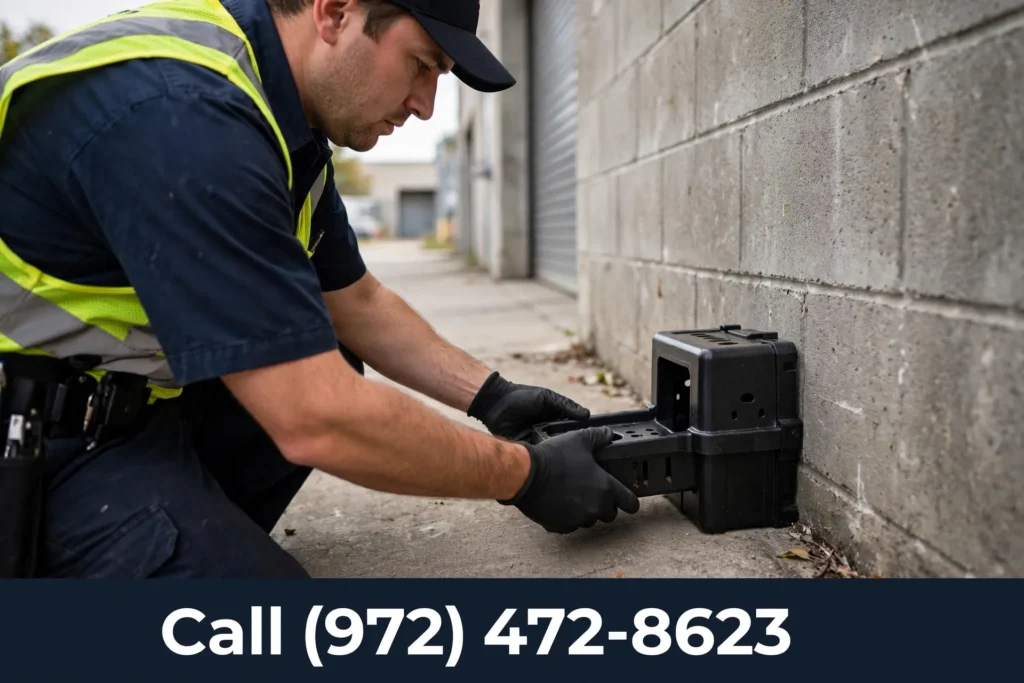
You cannot manage what you do not measure. A commercial monitoring program places tamper resistant bait stations around the exterior perimeter, typically 50 to 100 feet apart, to intercept rodents before they reach the building. Inside, glue boards sit along walls in receiving, storage, and break areas to reveal travel routes. Pheromone traps target stored product moths in food zones, and insect light traps in receiving capture flying insects for identification. Placement matters more than quantity. Devices go on a numbered site map, and every visit records what each device caught. Over months, that data reveals trends that show where to tighten exclusion and sanitation instead of guessing.

Rodent Exclusion Works Better Than Rodent Reaction
Trapping removes the rodents you have. Exclusion stops the next ones from arriving. Mice squeeze through gaps as small as a dime, so seal utility penetrations with copper mesh and sealant, install heavy duty door sweeps on every pedestrian door, and repair dock seals before gaps widen. Cover vents with quarter inch hardware cloth, and keep vegetation and pallets at least 18 inches from the foundation. Exclusion is a core part of a structured rodent control plan that pairs exterior bait stations with interior trapping and sealing. Done well, it reduces trap counts within weeks, which is exactly what auditors want to see.
Sanitation and Door Discipline Prevent Most Infestations
Sprays cannot overcome sloppy sanitation. Clean spills the same shift they happen. Keep dumpsters closed and away from dock doors. Rotate stock first in first out so no pallet sits long enough to become a pest habitat. Enforce break room rules about food storage and trash, because German cockroaches start near food and spread from there. Door discipline deserves its own training moment. Every employee who touches a dock door should know that an open door is an open invitation. Post the expectation, assign responsibility for each door, and make closing doors part of the shift routine.
When to Bring In a Licensed Commercial Pest Service
Some situations call for professional help. Recurring rodent sightings, droppings in product zones, moth activity in stored goods, bird pressure on the roof, or findings from a recent audit all signal that the problem has outgrown in house efforts. A licensed commercial service builds an integrated pest management program around your facility: inspection, monitoring, exclusion recommendations, targeted treatments, and documentation. For offices and break rooms attached to the warehouse, our general pest control in Grand Prairie keeps the entire property covered under one coordinated plan.
DIY Effort vs a Professional Commercial Pest Program
It helps to compare what in house effort actually delivers against a licensed commercial program before deciding where to invest.
| Factor | In House DIY Effort | Professional Commercial Program |
|---|---|---|
| Coverage | Spot reactions where pests are seen | Whole facility plan built on inspection |
| Monitoring | Occasional traps with no records | Mapped devices checked on schedule with trend data |
| Documentation | Invoices and memory | Audit ready reports for every visit |
| Expertise | General maintenance staff | Licensed technicians trained in commercial IPM |
| Response | When someone notices a problem | Scheduled service plus emergency response |
| True cost | Hidden losses from product damage and failed audits | Predictable program cost with measurable results |
Important Considerations for Facility Managers
Choosing a commercial pest provider is a long term partnership, so vet candidates carefully. Confirm the company holds a current Texas structural pest control license and carries proper insurance. Ask whether they practice integrated pest management or simply spray on a schedule. Review a sample service report before signing, and make sure it includes device readings, findings, and corrective actions. Companies with facilities on both sides of the metroplex can coordinate coverage through our pest control in Dallas TX team, keeping reporting consistent across locations.
Frequently Asked Questions
What pests are most common in Texas warehouses?
House mice, roof rats, American and German cockroaches, stored product pests such as Indian meal moths, and birds such as pigeons top the list. Flies and spiders follow wherever food waste and dock lights attract them.
How often should a warehouse be inspected for pests?
Most commercial programs service facilities monthly, with high risk food storage sites on a biweekly or weekly schedule. Between visits, your team should watch dock areas, receiving, and break rooms and report sightings immediately.
What is IPM and why do auditors ask about it?
Integrated pest management combines inspection, monitoring, exclusion, sanitation, and targeted treatment, using pesticides only where needed. Auditors favor it because it is preventive, documented, and measurable.
Can I handle warehouse pests with store bought sprays?
Store bought sprays may knock down visible insects, but they do not address entry points or breeding sites, and misapplied products can contaminate food contact areas. In a commercial facility they usually make the paper trail worse instead of better.
How do I prepare for a third party food safety audit?
Gather your pest monitoring site map, service reports, trend data, and corrective action records. Walk the facility for sanitation and exclusion issues, and confirm your provider will be reachable during the audit.
Does Exterminator Grand Prairie service warehouses in Grand Prairie TX?
Yes. Exterminator Grand Prairie, based at 726 Dalworth St, Grand Prairie, TX 75050, provides licensed commercial pest programs for warehouses and distribution centers across Grand Prairie, including monitoring, exclusion, and audit ready documentation.
How fast can you respond to a pest emergency at my facility?
Call (972) 472-8623 and we will schedule the fastest available visit, often the same day for urgent commercial issues in the Grand Prairie area.

3 Responses