TL;DR
- Heat treatment raises room temperatures to 120 to 140 degrees Fahrenheit and usually finishes in a single day.
- Chemical treatment uses residual insecticides and normally takes 2 to 3 visits spaced a few weeks apart.
- Heat works fast but needs heavy prep; chemical treatment needs patience and strict follow up visits.
- The right choice depends on infestation size, clutter level, pets, electronics, and whether you rent or own.
Waking up with itchy bites and finding rust colored spots along your mattress seams is a miserable start to the day. Store bought sprays barely dent the problem. The two professional options that actually end infestations are bed bug heat treatment and chemical treatment, and they work in completely different ways.
This guide explains how each method works, what preparation each demands, how long results take, and when each is the wrong choice. If you want a technician to confirm what you are dealing with first, call (972) 472-8623 and we will inspect before we recommend anything.
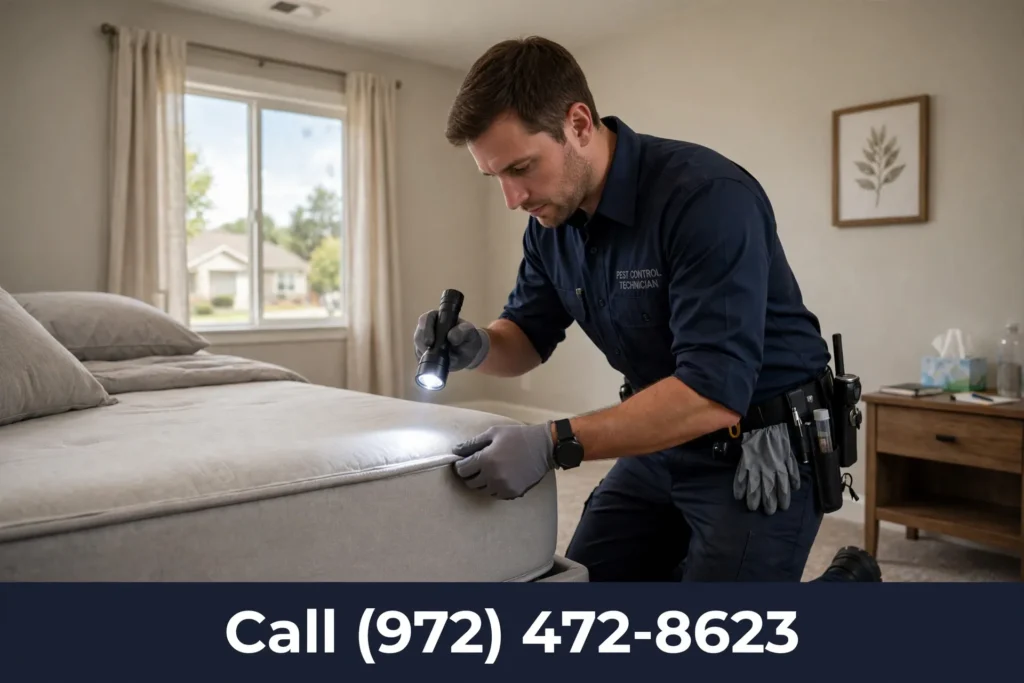
How Bed Bug Heat Treatment Works
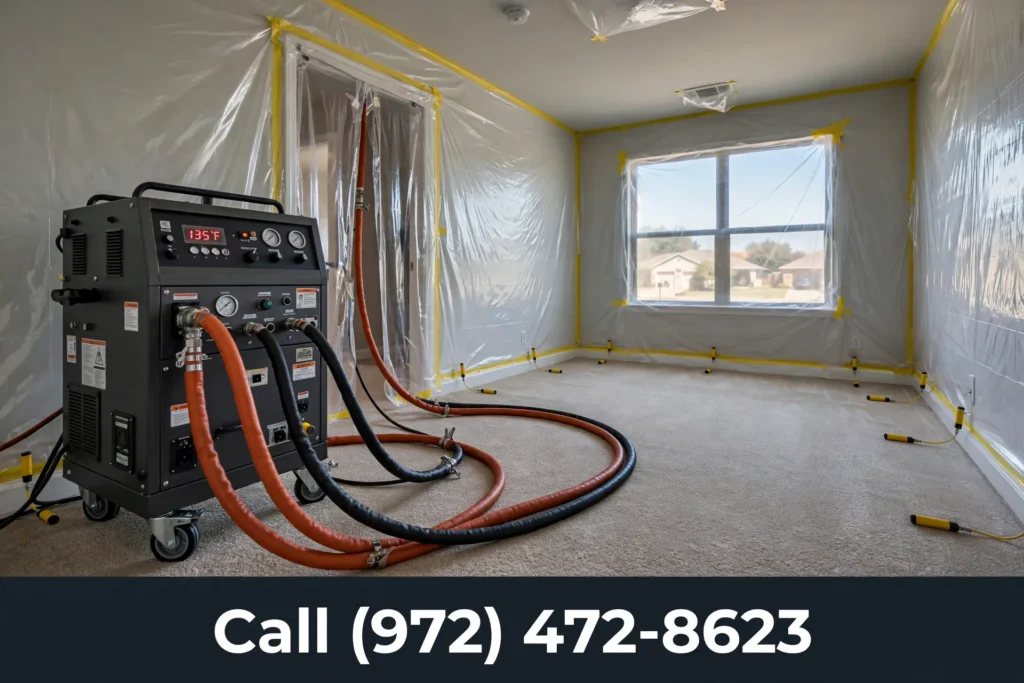
Bed bug heat treatment turns your bedroom into an oven for several hours. A crew brings in industrial heaters and fans and raises the room and everything in it to between 120 and 140 degrees Fahrenheit, with wireless thermometers in the hardest to heat spots confirming lethal temperatures reach everywhere.
Bed bugs and their eggs die above about 120 degrees of sustained heat, which penetrates mattresses, furniture, wall voids, and clutter that sprays can never fully reach. The temperature does the killing in one continuous session, so a typical treatment finishes in one day.
The tradeoff is preparation. Before a heat job, remove anything heat can damage: candles, vinyl records, oil paintings, medications, aerosol cans, and houseplants. Electronics may have to leave the room. Pets must be out for the whole day, including fish tanks, because aquarium water heats fast. Clutter has to be bagged so hot air can circulate. Poor prep is the main reason heat treatments underperform.
Heat leaves no chemical residue, which many families prefer, but it also leaves no ongoing protection: a new bed bug hitching a ride home in luggage finds the room just as vulnerable. That is why a proper program pairs heat with monitoring and sealing advice. If you are still deciding, start with our page on professional bed bug control to see how an inspection confirms the infestation level first.
How Chemical Bed Bug Treatment Works
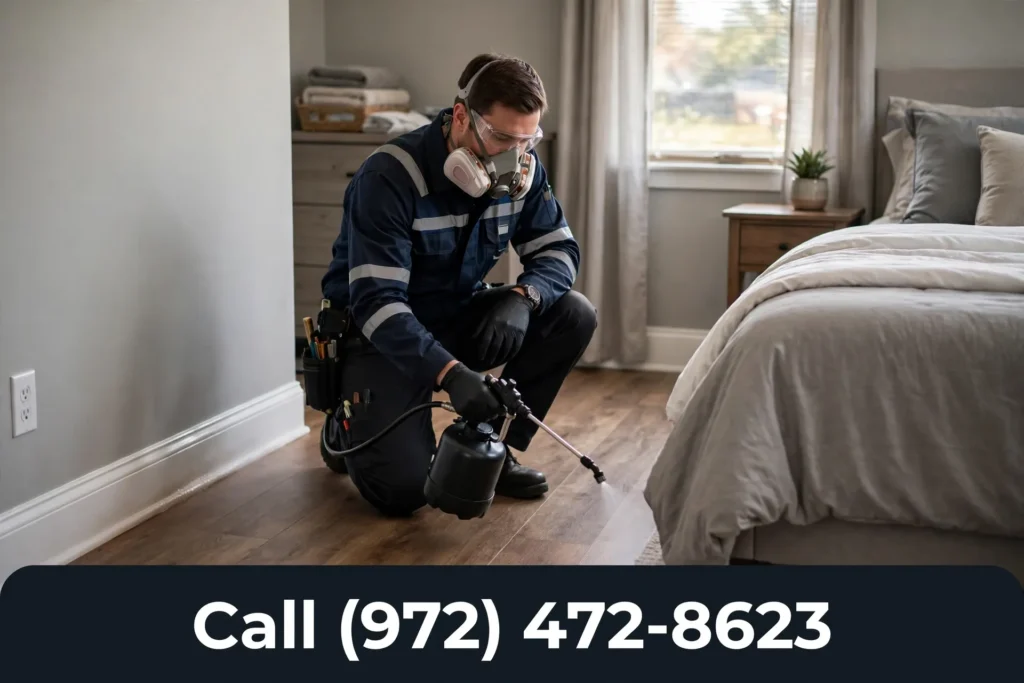
Chemical treatment takes the slow and steady route. A licensed technician applies residual insecticides and growth regulators into the cracks, baseboards, bed frames, and furniture joints where bed bugs hide and travel. These products keep working for weeks: bed bugs crossing a treated surface pick up the material and die, and growth regulators stop young bugs from reaching breeding age.
The catch is the egg cycle: most liquid insecticides do not reliably kill eggs, which hatch in roughly one to two weeks, so a single visit almost never finishes the job. A standard program means 2 to 3 visits spaced two to three weeks apart, each targeting the newly hatched generation. Skipping a follow up is the most common reason chemical programs fail.
Preparation is lighter than heat but still matters: declutter around beds, wash and dry bedding on hot settings, pull furniture a few inches from walls, and empty nightstand drawers. People and pets usually stay out of treated rooms for a few hours until products dry, and your technician will give you an exact safe return time. Fall is busy for indoor pests across North Texas, so here is why spiders become more active in fall around Grand Prairie homes.
Heat Treatment vs Chemical Treatment: Side by Side
Here is how the two methods compare on the factors Grand Prairie homeowners ask about most.
| Factor | Heat Treatment | Chemical Treatment |
|---|---|---|
| Speed of results | One day; all life stages die at once | Several weeks; 2 to 3 visits to break the egg cycle |
| Disruption to your home | You leave for the full day | You leave treated rooms for a few hours per visit |
| Prep work | Heavy: remove heat sensitive items, bag clutter, relocate pets | Moderate: declutter, launder bedding, pull furniture from walls |
| Ongoing protection | None after cool down | Weeks of residual activity |
| Follow up needed | Usually minimal; monitoring confirms success | Rechecks are essential; skipped visits cause failure |
| Best for | Severe infestations and one day turnarounds | Light to moderate infestations and staged treatment plans |
| Watch out for | Heat sensitive items need full removal; poor prep ruins results | Eggs survive the first pass; finish the full schedule |
Important Considerations Before You Choose
Start with an honest look at your clutter. Heat needs open airflow, and a packed room cannot be heated evenly no matter how good the equipment is. If you cannot clear and bag the clutter, chemical treatment is the realistic choice.
Next, inventory what heat could damage: candles, cosmetics, vinyl records, framed photos, medications, and electronics. Moving it all out for the day is real work, and chemical treatment avoids that entirely, which is one reason apartment dwellers prefer it.
Pets need a clear plan either way. Dogs and cats leave during heat treatments along with their beds, and fish tanks must be relocated because the water heats fast. With chemical treatments, aquariums need covers and pumps off during application, and your technician will confirm when normal care can resume.
Renters face an extra layer. In Texas, notify the landlord or property manager in writing as soon as bed bugs are confirmed, because the lease often assigns treatment responsibility. Do not drag an infested mattress to the curb or move furniture between rooms first; both spread bugs to new areas. Commercial spaces follow a different playbook, covered in our guide to warehouse pest challenges in Grand Prairie.
Finally, think about reintroduction. Frequent travelers and anyone who buys used furniture face higher odds of bringing bed bugs home again. Heat solves today completely but protects nothing tomorrow, so pair it with mattress encasements and careful luggage habits. We serve the wider metroplex with the same standards; see our pest control in Dallas TX page for nearby coverage.
When Heat Treatment Is the Wrong Choice
Heat is powerful but not universal. Skip it when extreme clutter or immovable heat sensitive collections make proper prep impossible, or in multi unit buildings where neighboring infested units will not be treated, because bugs will walk back through the walls within weeks. Heat also usually costs more up front because of equipment and crew size, so a tight budget with a light infestation may suit a careful chemical program better.
When Chemical Treatment Is the Wrong Choice
Chemical treatment is the wrong tool when you need the problem gone today, before guests arrive or ahead of a home sale, or for severe, long established infestations where waiting weeks between visits lets the population keep spreading. Some local populations show reduced sensitivity to common insecticides; if the first visit shows weak results, switching methods beats repeating a failing one. Households that cannot commit to the full schedule should choose heat, because a half finished chemical program wastes money and breeds tougher bugs.
Bed Bug Treatment FAQs
Does heat treatment kill bed bug eggs?
Yes. Sustained temperatures above about 120 degrees Fahrenheit kill bed bugs in every life stage, including eggs, and technicians verify with wireless thermometers in the hardest to heat spots.
How many chemical treatments do bed bugs need?
Most programs need 2 to 3 visits spaced two to three weeks apart, because eggs survive the first application and hatch later. Each follow up targets the new generation before it can lay fresh eggs.
Can I stay home during bed bug treatment?
Not during heat treatment; the home must be empty while rooms reach 120 to 140 degrees. For chemical treatment, people and pets typically leave treated rooms for a few hours until products dry.
Do bed bugs come back after treatment?
They can, especially after heat treatment, which leaves no residual barrier. New bugs arrive through travel, guests, and used furniture, so use mattress encasements and act fast at the first sign of bites.
Which treatment is better for apartments?
It depends on access and building rules. Chemical treatment stages easily unit by unit with lighter prep, but neighboring infested units can reinfest a treated apartment. Heat suits a single heavily infested unit when management approves equipment access. Always notify your landlord in writing first.
Does Exterminator Grand Prairie offer both heat and chemical bed bug treatment?
Yes. We inspect first, confirm the infestation level and your home’s layout, then recommend the method that fits. Many jobs combine both: heat for the worst rooms, targeted chemical follow up elsewhere.
How fast can Exterminator Grand Prairie start bed bug treatment?
We offer same day and emergency service across Grand Prairie. Call (972) 472-8623 to schedule an inspection and get a treatment plan with clear prep instructions.
Bed bugs do not wait, and neither should you. Whether heat or chemical fits your home, the worst option is doing nothing while the population doubles. Get an inspection, get a plan, and get your sleep back.